AI Compliance News: New AI Rules in 2026
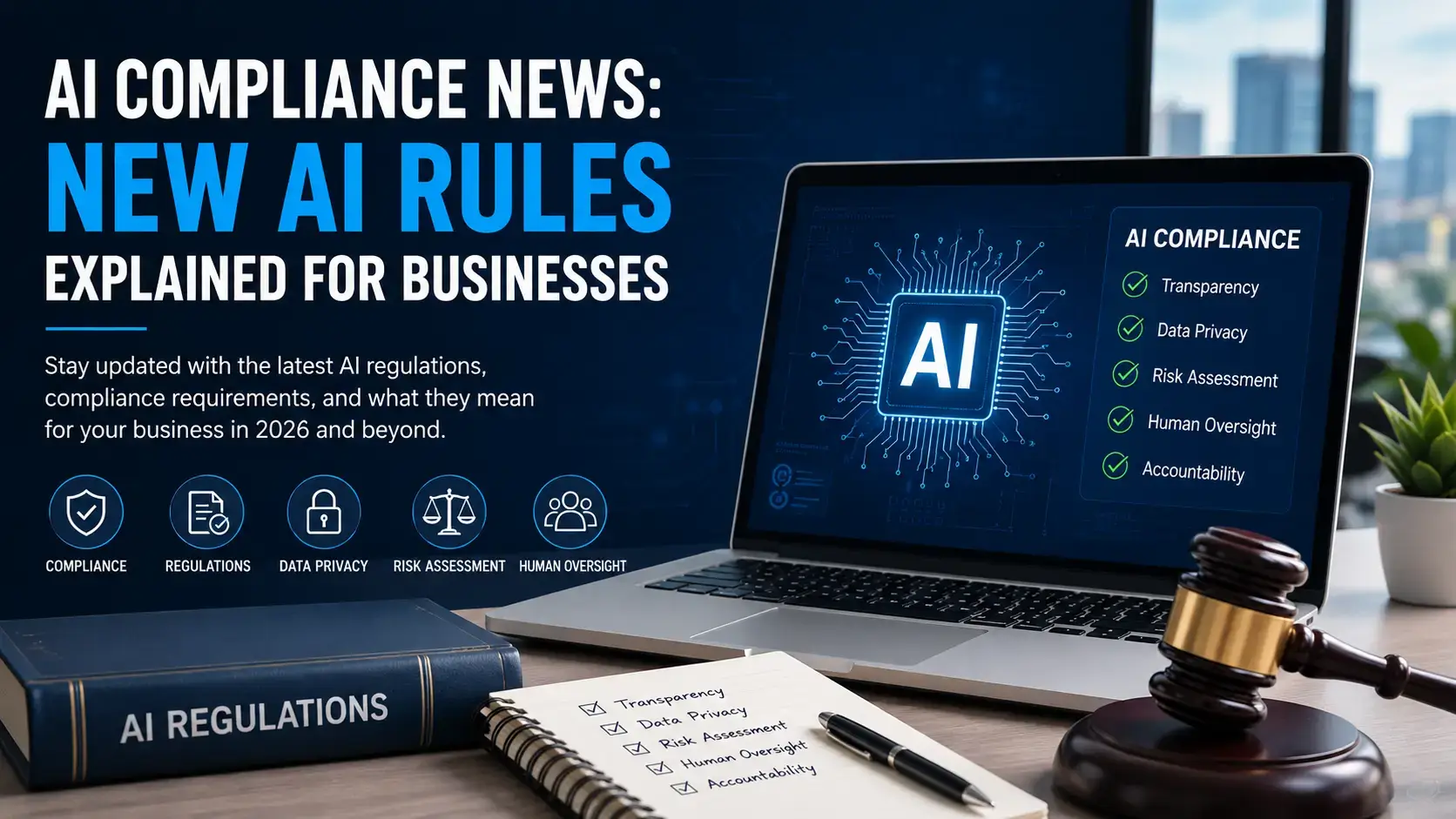
AI Compliance News: New AI Rules Explained for Businesses
Artificial intelligence is evolving fast. Faster than most businesses expected, honestly. One week a company launches a powerful AI model. The next week regulators start talking about compliance requirements, transparency rules, or restrictions on high-risk AI systems.
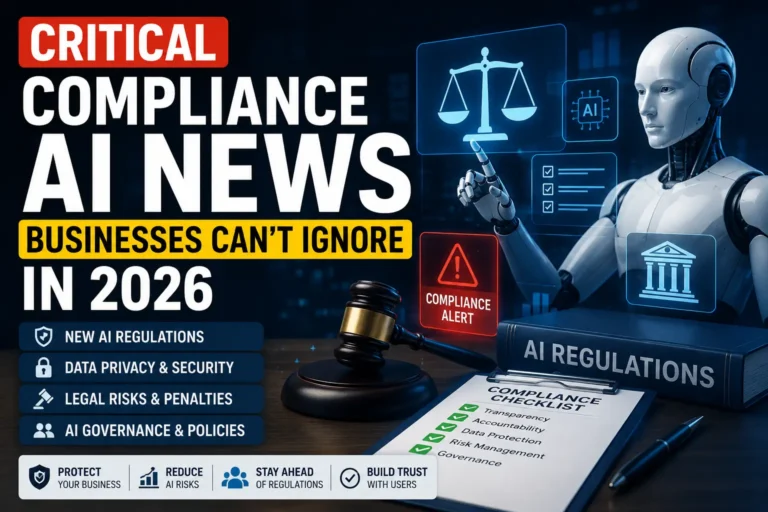
That’s exactly why AI compliance news has become impossible to ignore in 2026. If your business uses tools like ChatGPT, Microsoft Copilot, Gemini, Midjourney, or AI automation software, the legal side of AI suddenly matters a lot more than it did a year ago.
And here’s the thing… Most companies still don’t fully understand what AI compliance actually means in practice. Some think it only affects massive tech companies. Others assume AI regulations are still years away from becoming serious. Neither is really true anymore, and keeping track of breaking AI compliance news updates has become crucial for long-term operational success.
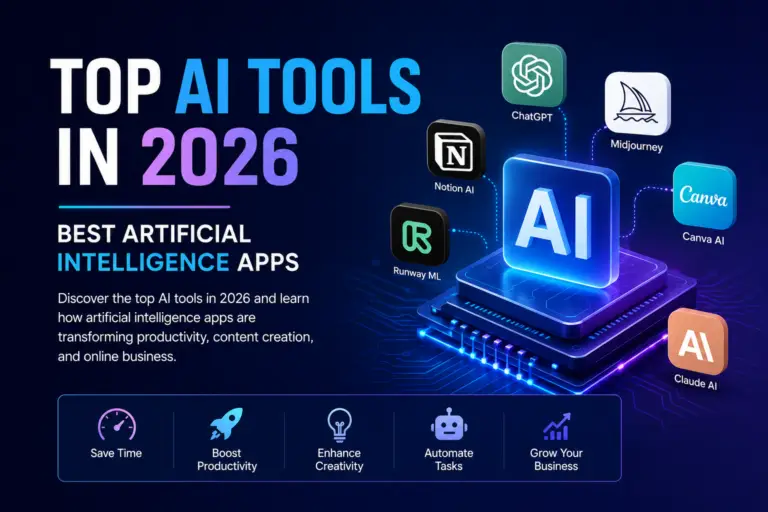
In this guide, you’ll learn everything about navigating these shifting legislative waters safely. To safely scale your business without legal friction, make sure to read our detailed breakdowns on the top AI tools dominating the industry and analyze where the market is heading next in our guide to the future of AI systems.
Table of Contents
- What Is AI Compliance?
- Why AI Compliance News Matters in 2026
- The Biggest AI Regulations Right Now
- How AI Rules Affect Businesses
- AI Compliance Risks Companies Ignore
- AI Compliance Tools Businesses Are Using
- Comparison Table: Compliant vs Non-Compliant AI Practices
- What Freelancers and Small Businesses Should Know
- The Future of AI Compliance
- Frequently Asked Questions (FAQ)
What Is AI Compliance?
AI compliance refers to the process of making sure AI systems follow legal, ethical, and regulatory standards. That sounds simple on paper. In reality, as modern AI compliance news headlines indicate, it’s becoming increasingly complex over time.
Today, AI compliance can involve:
- Data privacy rules
- Transparency requirements
- AI-generated content disclosure
- Risk assessments
- Bias monitoring
- Security protections
- Human oversight requirements
For example, if your business uses AI to automate customer decisions, generate marketing content, or analyze personal data, regulators may expect certain safeguards. And yes, this affects small businesses too — not just enterprise companies.
Why AI Compliance News Matters in 2026
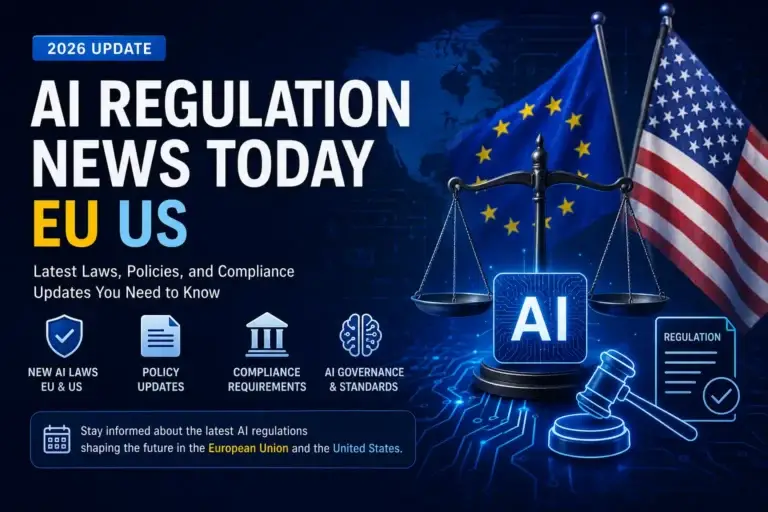
A few years ago, AI regulation was mostly theoretical. Now it is becoming operational. Governments across the world are introducing AI laws at a much faster pace, especially in regions like the European Union, the United States, the United Kingdom, Japan, and Canada.
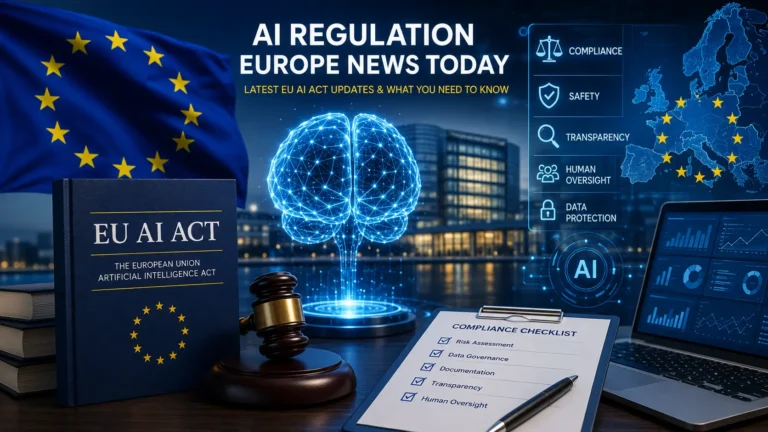
The EU AI Act has probably received the most attention so far. It introduced a risk-based approach to AI regulation that could influence global standards moving forward. In practice, businesses are starting to realize something important: AI adoption without compliance planning can become expensive later. This reality highlights why checking AI compliance news regularly is so vital for corporate risk management strategies.
That matters because companies increasingly rely on AI tools for:
- Customer support
- SEO content creation
- AI automation
- Marketing campaigns
- Recruitment
- Analytics
- Productivity workflows
If you already use AI tools for freelancing or online business operations, this trend directly affects you.
The Biggest AI Regulations Right Now
EU AI Act
The EU AI Act is currently one of the most influential AI regulations globally. It classifies AI systems into categories based on strict parameters:
| Risk Level | Example |
|---|---|
| Minimal Risk | AI chatbots |
| Limited Risk | AI-generated content |
| High Risk | Hiring systems, medical AI |
| Unacceptable Risk | Social scoring systems |
High-risk AI systems face stricter compliance obligations. This includes documentation requirements, human oversight, transparency rules, and strict risk management systems. Even companies outside Europe may be affected if they serve EU users, which is a frequent talking point in western AI compliance news updates.
United States AI Policies
The United States still has a more fragmented approach. Instead of one centralized AI law, multiple agencies like the Federal Trade Commission (FTC) are introducing guidance related to AI transparency, consumer protection, copyright concerns, data privacy, and AI bias. Companies using generative AI for business operations are paying close attention to these agency updates.
UK and Japan AI Regulation Trends
The UK has taken a more flexible regulatory approach so far. Japan, meanwhile, is becoming increasingly active in AI governance discussions, especially around enterprise AI and intellectual property concerns. Interestingly, both regions are trying to encourage innovation while avoiding overly aggressive restrictions.
How AI Rules Affect Businesses
This is where things become practical. AI compliance isn’t just a legal issue anymore. According to leading financial reports from Bloomberg, it’s becoming a core part of operational business strategy across different departments.
Marketing Teams
If your company uses AI-generated content, regulators may eventually require disclosure in some situations. That could affect AI blog writing, AI-generated ads, AI product descriptions, and synthetic media. Some businesses already started adding transparency labels proactively to avoid compliance penalties.
AI Automation Workflows
Businesses using AI automation tools must think about data handling, user consent, decision transparency, and system security. This becomes especially important in industries like finance, healthcare, and HR.
AI Search and SEO
Many companies now use AI SEO tools to scale content production. But there’s growing discussion around misinformation, spam automation, content authenticity, and AI-generated search manipulation. Major industry tracking networks like Reuters highlight that Google has repeatedly emphasized that helpful, people-first content matters more than whether AI was used. Still, quality control remains essential.
AI Compliance Risks Companies Ignore
A surprising number of businesses still underestimate compliance risks because they do not track relevant AI compliance news regularly. Some common mistakes include:
- Using AI Without Internal Policies: Many teams use AI tools informally without clear company guidelines. That creates legal and operational risks quickly.
- Uploading Sensitive Data Into AI Tools: Employees sometimes paste confidential information into AI chatbots without realizing the implications. This is one reason many enterprises now implement AI governance frameworks internally.
- Assuming Small Businesses Are Exempt: Smaller businesses often believe regulations only target massive corporations. But in practice, compliance obligations can still apply depending on geography, industry, user data, and the specific AI use case.
AI Compliance Tools Businesses Are Using
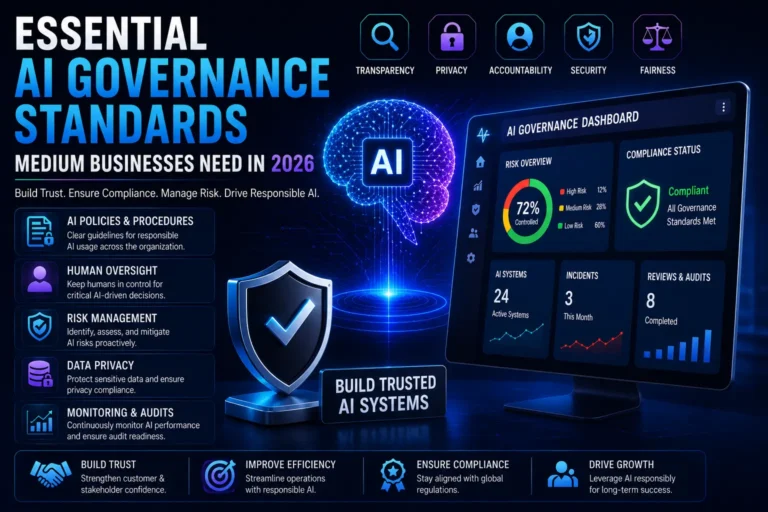
As regulations grow, businesses are adopting AI compliance software more aggressively. Popular categories include AI monitoring tools, risk assessment platforms, AI governance dashboards, data privacy management software, and comprehensive AI audit solutions. Large companies are also investing heavily in internal AI governance teams. Tools from companies connected to Microsoft, Google, IBM, and OpenAI ecosystems are becoming especially popular.
Comparison Table: Compliant vs Non-Compliant AI Practices
| Compliant AI Practices | Risky AI Practices |
|---|---|
| Transparent AI usage | Hidden AI-generated content |
| Human oversight | Fully automated critical decisions |
| Data protection measures | Weak security controls |
| AI documentation | No usage tracking |
| Bias testing | Unverified AI outputs |
| Responsible automation | Aggressive spam automation |
What Freelancers and Small Businesses Should Know
Freelancers sometimes assume AI compliance doesn’t affect them. Honestly, that assumption may not age well. If you run an AI content business, an SEO agency, a freelance automation service, or an AI marketing operation, you should probably start paying attention to AI compliance news updates now. Especially if you work with international clients, process user data, automate customer interactions, or use AI-generated visuals or text.
The good news? Most small businesses don’t need enterprise-level compliance systems yet. But basic best practices matter.
Smart Starting Points:
- Use trusted AI platforms
- Avoid uploading sensitive client data
- Add human review processes
- Document important AI workflows
- Stay informed about AI regulation news
In practice, businesses that adapt early usually face fewer operational problems later on.
The Future of AI Compliance
AI regulation is still evolving. Fast. Some experts believe compliance standards could eventually become as common as cybersecurity requirements. That may sound extreme now, but there are already clear signs pointing in that direction in recent AI compliance news briefs. We’re seeing growing pressure for AI transparency, explainable AI systems, content authentication, watermarking, and explicit AI risk disclosures. Meanwhile, AI tools continue becoming more powerful every month. That combination almost guarantees stronger oversight moving forward.
Frequently Asked Questions (FAQ) About AI Compliance News
What is AI compliance?
AI compliance refers to following legal, ethical, and regulatory standards when developing or using artificial intelligence systems.
Why is AI compliance news important?
Following updated AI compliance news helps businesses stay informed about changing AI laws, regulations, and governance requirements that could affect operations.
Does AI compliance affect small businesses?
Yes. Even small businesses using AI tools may face compliance responsibilities depending on their industry and region.
What is the EU AI Act?
The EU AI Act is a European regulation designed to classify and regulate AI systems based on specific societal risk levels.
Can freelancers use AI safely?
Yes, but freelancers should use AI responsibly, avoid sharing sensitive client data, and maintain human oversight over AI-generated work.
Stay Ahead of the AI Evolution
Regulations are changing fast, but so is the technology. Don’t let compliance hold your business back—equip yourself with the latest tech breakthroughs and forward-looking strategic updates.
Explore AI Future Trends