Best Free AI Tools for Human Resources in 2026
Human resources teams are under more pressure than ever. Hiring cycles move faster. Candidates expect quicker responses. Teams are expected to do more with fewer resources. And honestly, a lot of HR departments still waste hours on repetitive admin work that could probably be automated already.
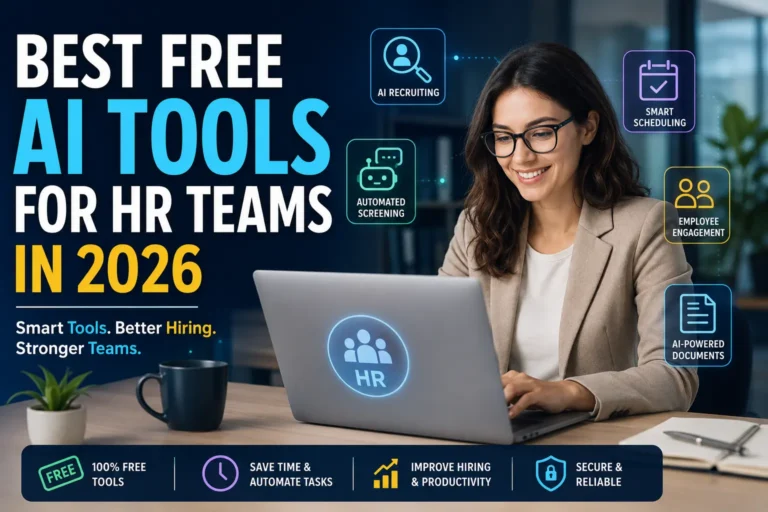
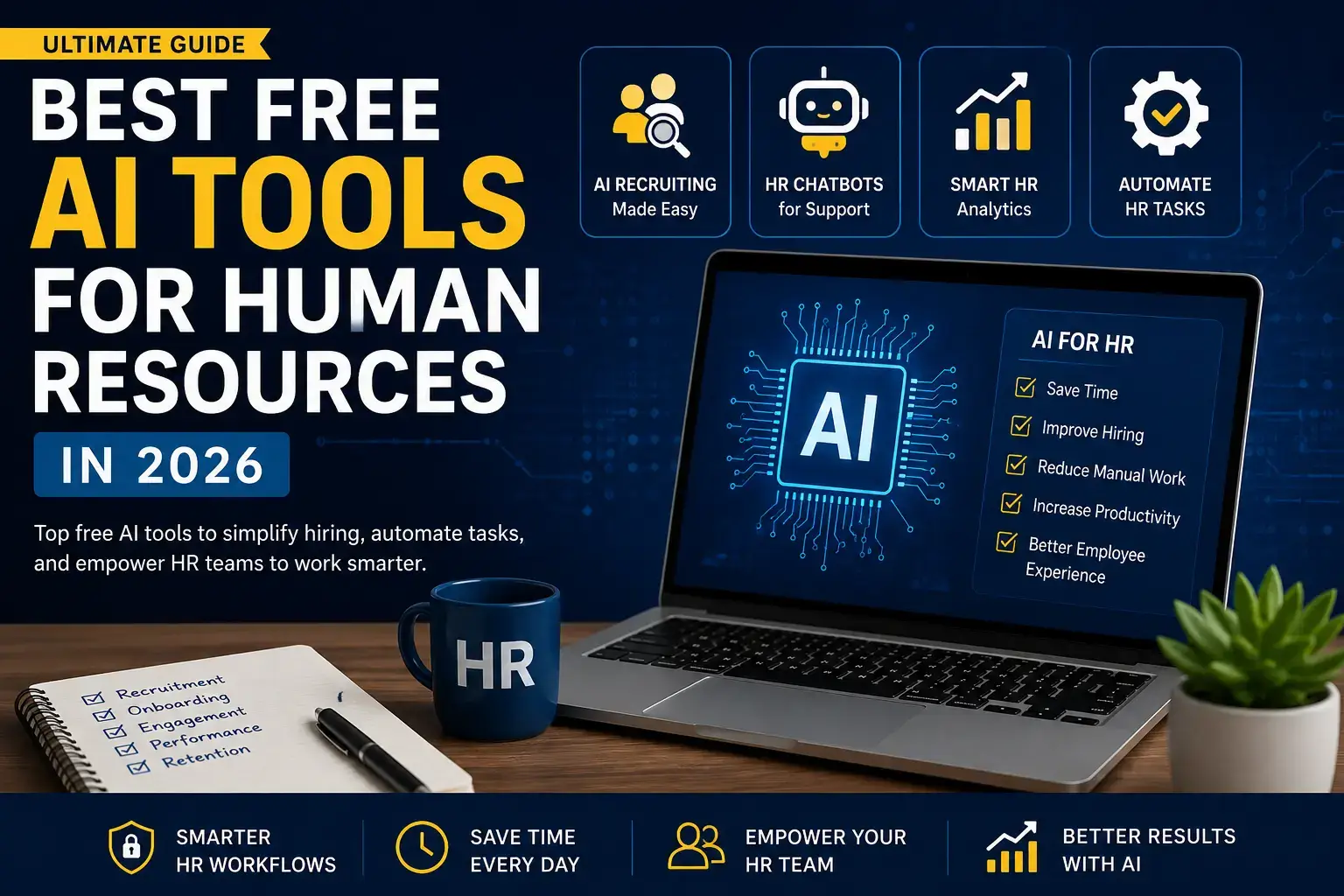
That’s one reason free ai tools for human resources are becoming incredibly popular in 2026. Companies of all sizes — from startups to enterprise teams — are using AI to streamline recruiting, automate onboarding, improve employee engagement, and reduce manual work.
And here’s the interesting part… You no longer need an expensive enterprise platform to start using AI in HR. Many modern AI HR tools now offer surprisingly capable free plans. Some are even good enough for small businesses and freelance recruiters to use daily without upgrading immediately, showcasing how accessible the top free ai tools for human resources have actually become.
In this guide, you’ll discover the best free ai tools for human resources, what they actually do well, where they still struggle, and which tools are worth testing first depending on your HR workflow.
Table of Contents
Why HR Teams Are Using AI More in 2026
A few years ago, AI in human resources felt experimental. Now it’s becoming normal. Recruiters use AI to screen resumes. HR managers automate onboarding workflows. Some companies even use AI tools to analyze employee feedback and workplace sentiment.
That matters because HR work is often repetitive by nature. Think about how much time goes into:
- reviewing applications
- scheduling interviews
- writing job descriptions
- onboarding new employees
- answering common HR questions
AI tools can reduce a surprising amount of that manual workload. In practice, many HR professionals are no longer asking: “Should we use AI?” They’re asking: “Which AI tools actually save time without creating new problems?” And honestly, that’s the better question.
What Makes a Good AI HR Tool?
Not every AI platform works well for HR teams. Some tools look impressive on landing pages but become frustrating during real workflows. According to data tracking insights by the Society for Human Resource Management (SHRM), corporate efficiency relies entirely on intuitive software alignment. The best AI HR software usually does a few things consistently well:
1. Saves Time on Repetitive Tasks
Good AI tools automate resume screening, candidate summaries, onboarding documents, scheduling, and repetitive communication without making everything feel robotic.
2. Improves Hiring Efficiency
Strong AI recruiting tools help HR teams filter candidates faster, identify relevant skills, organize applications, and reduce manual sorting. This becomes especially useful for companies receiving hundreds of applications.
3. Keeps Workflows Simple
Some HR software becomes overly complicated quickly. The best free ai tools for human resources usually prioritize clean dashboards, easy onboarding, and automation without confusion. That sounds obvious, but a lot of platforms still overcomplicate basic HR tasks.
4. Offers Useful Free Features
A “free” AI tool that limits everything important isn’t very useful. The tools below were selected because their free plans still provide meaningful functionality.
Best Free AI Tools for Human Resources
1. ChatGPT
Best For: General HR assistance and workflow automation
OpenAI’s ChatGPT is becoming one of the most flexible free ai tools for human resources teams. Recruiters use it for writing job descriptions, interview questions, onboarding emails, employee communication, and HR policy drafts. If you’ve tested similar AI writing tools before, you’ll notice ChatGPT feels much more adaptable than traditional HR software.
Free Plan Highlights: AI writing assistance, HR communication support, workflow brainstorming, and recruiting content generation.
Limitations: It’s not a dedicated HR platform, so you still need human oversight.
2. Notion AI
Best For: HR documentation and onboarding
Notion AI works surprisingly well for HR organization. Many teams use it to manage onboarding systems, create employee knowledge bases, organize HR workflows, and summarize meeting notes. In practice, it’s especially useful for remote teams.
Free Features: AI writing support, workspace organization, and documentation tools.
Limitations: Advanced AI features may require paid upgrades.
3. HireVue
Best For: AI-powered recruiting workflows
HireVue focuses heavily on recruitment automation. It helps companies screen candidates, automate interviews, and evaluate applications faster. Large companies often use platforms like this to reduce recruiting bottlenecks.
Key Features: interview automation, candidate evaluation, and AI recruiting workflows.
Limitations: Some advanced enterprise features are restricted.
4. Grammarly
Best For: HR communication quality
A lot of HR communication still happens through email and internal messaging. Grammarly helps HR teams improve professional communication, reduce writing mistakes, and create clearer onboarding materials. It’s simple, but honestly, still one of the most useful productivity tools available.
Free Features: grammar checking, tone suggestions, and writing improvements.
5. BambooHR
Best For: Small business HR management
BambooHR combines traditional HR management with AI-driven automation features. Many small businesses use it for employee records, onboarding, time tracking, and recruiting workflows.
Strengths: beginner-friendly, clean interface, and strong HR workflow support.
Limitations: Free access is somewhat limited.
6. Zoho Recruit
Best For: Recruitment automation
Zoho Recruit is popular among recruiting agencies and small businesses. Its AI features help automate candidate matching, application management, and hiring workflows.
Free Features: applicant tracking, AI candidate suggestions, and workflow automation.
7. Tidio AI
Best For: Employee support chatbots
HR teams increasingly use AI chatbots internally. Tidio AI helps automate HR support questions, onboarding guidance, and employee FAQs. This can reduce repetitive HR support requests significantly.
8. ClickUp AI
Best For: HR project management
ClickUp AI combines productivity tools with AI workflow assistance. HR teams use it for hiring pipelines, onboarding tasks, internal collaboration, and HR workflow tracking.
Why It Stands Out: The platform works especially well for distributed teams managing multiple hiring processes simultaneously.
Comparison Table
| Tool | Best Use Case | Free Plan | AI Features |
|---|---|---|---|
| ChatGPT | HR content & workflows | Yes | AI writing |
| Notion AI | HR organization | Yes | Documentation AI |
| HireVue | Recruiting | Limited | AI interviews |
| Grammarly | HR communication | Yes | Writing AI |
| BambooHR | Small business HR | Limited | Workflow automation |
| Zoho Recruit | Recruitment | Yes | Candidate matching |
| Tidio AI | HR chatbots | Yes | AI conversations |
| ClickUp AI | HR productivity | Limited | Task automation |
How AI Is Changing Recruitment and HR
AI is already reshaping how companies hire and manage employees. Some changes are subtle. Others are massive. For example, recruiters can now summarize resumes instantly, generate interview questions automatically, identify skill matches faster, and automate repetitive communication.
Meanwhile, HR managers use AI to improve onboarding, organize employee documentation, automate internal support, and analyze employee feedback. Google, Microsoft, OpenAI, and other major companies are investing heavily in workplace AI tools right now. That alone tells you where the industry is heading.
Potential Downsides of AI HR Tools
AI in HR isn’t perfect. And honestly, some companies are adopting AI too aggressively without proper oversight. Landmark workflow analyses from Harvard Business Review (HBR) show that fully automated pipelines often introduce unexpected operational issues. A few common concerns include:
Bias Risks
AI systems can sometimes reflect biased training data. That’s why human review still matters during hiring decisions.
Privacy Concerns
HR teams often handle sensitive employee information. Using free ai tools for human resources without proper data policies can create data compliance risks.
Over-Automation
Candidates still want human interaction. Too much automation can make hiring experiences feel cold and impersonal. The best HR teams usually combine AI efficiency with human judgment instead of relying entirely on automation.
How Small Businesses Can Use AI in HR
You don’t need a huge HR department to benefit from AI. Small businesses can start with simple workflows like AI-generated job descriptions, automated interview scheduling, onboarding templates, and employee FAQ chatbots. If you are building external systems, checking out the best websites for freelancers can give you an edge on how digital operators utilize modern workflows efficiently.
Even freelancers running small agencies can use free ai tools for human resources to streamline hiring and onboarding. And realistically, that trend will probably continue growing over the next few years.
FAQ
What are the best free AI tools for human resources?
Some of the best free ai tools for human resources include ChatGPT, Notion AI, Grammarly, Zoho Recruit, and Tidio AI.
Can small businesses use AI HR tools?
Yes. Many AI HR tools offer free plans suitable for startups and small businesses.
Are AI recruiting tools accurate?
AI recruiting tools can improve efficiency, but human oversight is still important for fair hiring decisions.
Is AI replacing HR professionals?
Not really. AI is mostly helping HR teams automate repetitive tasks rather than replacing human decision-making entirely.
What is the best AI tool for recruiting?
It depends on your workflow, but platforms like HireVue and Zoho Recruit are popular for AI-powered recruiting.
Final Thoughts
The best free ai tools for human resources can genuinely save time when used correctly. Some help with recruiting. Others improve onboarding, communication, or employee support.
But here’s the thing… The most effective HR teams usually don’t rely entirely on AI. They use AI to remove repetitive tasks while keeping human judgment at the center of hiring and employee management. That balance matters more than most companies realize.
As AI tools continue evolving in 2026, HR workflows will probably become faster, smarter, and far more automated than they are today — especially for businesses willing to adapt early.
Build Smarter Automation Engines Today
Success isn’t about chasing every trending shortcut—it is about constructing concrete, useful systems that solve market needs. Equip yourself with advanced blueprints and curated strategic updates.
Explore AI Blueprints