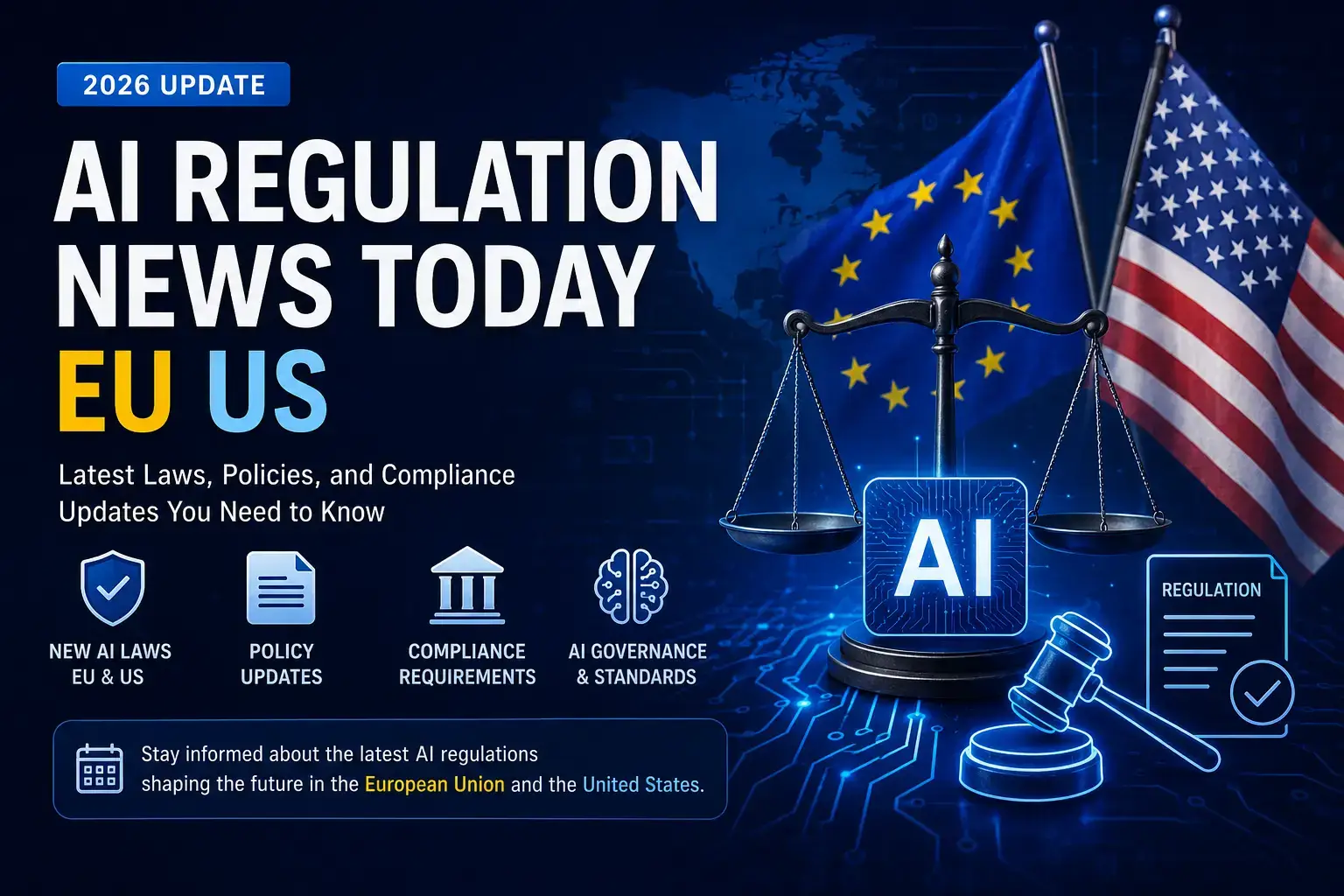
AI Regulation News Today EU US: What Changed in 2026?
AI regulation is moving faster than most businesses expected.
A year ago, many companies treated AI governance as something “for later.” Now? Legal teams, SaaS startups, enterprise executives, and even freelance developers are suddenly paying close attention to compliance frameworks coming from both the European Union and the United States. Following specific AI regulation news today EU US dashboards is no longer just for enterprise legal teams—it’s vital for anyone deploying automated models.
And honestly, that shift was inevitable.
AI systems are no longer experimental side projects. They’re now influencing hiring decisions, financial recommendations, healthcare workflows, cybersecurity systems, content generation, and customer support at massive scale.
That creates obvious opportunities.
But it also creates risk.
Which is exactly why searches for AI regulation news today EU US continue rising rapidly across Google, Microsoft Bing, and AI-powered search platforms.
This guide breaks down:
- The latest AI regulation developments
- What the EU AI Act actually changes
- How US AI policy differs
- What businesses should prepare for
- Why AI compliance is becoming a serious competitive advantage in 2026
Why AI Regulation Is Accelerating
AI adoption exploded faster than regulators expected. Platforms powered by OpenAI, Google DeepMind, Microsoft AI systems, Anthropic, and countless SaaS startups pushed generative AI directly into mainstream business operations almost overnight. To keep pace, tracking the latest shifts on our AI compliance news portal has become critical for global tech stacks.
In practice, regulators became concerned about:
- Algorithmic bias
- Misinformation
- Deepfakes
- Privacy violations
- Copyright concerns
- Employment discrimination
- Cybersecurity threats
- Autonomous decision-making
That pressure forced governments to respond quickly. The European Union moved first with a more centralized regulatory framework. The United States, meanwhile, has taken a more fragmented approach involving federal guidance, state-level initiatives, and industry standards. Analyzing the core AI regulation news today EU US reports shows that this legal split drastically changes cross-border operations.
And the gap between those strategies is becoming increasingly important for global companies. Understanding these changes directly impacts how teams approach the future of AI scaling strategies over the next decade.
Latest AI Regulation News Today EU US
EU AI Act Enforcement Is Expanding
The EU AI Act remains the biggest AI regulation story globally right now. Following recent legislative adjustments in mid-2026, European regulators continue refining risk classifications, compliance obligations, transparency requirements, and prohibited AI use cases. High-risk AI systems now face heavier scrutiny, especially in hiring, healthcare, banking, law enforcement, and education.
That matters because companies serving EU users may still fall under these rules even if they operate outside Europe. Monitoring current AI regulation news today EU US highlights reveals that a lot of US SaaS companies are starting to realize that now as enforcement parameters crystallize.
US AI Policy Is Becoming More Aggressive
For a while, the United States relied mostly on voluntary AI safety commitments. That’s changing. Recent AI regulation news today EU US discussions increasingly involve federal AI risk assessments, AI accountability frameworks, cybersecurity standards, consumer protection enforcement, and AI transparency initiatives.
Several US states are also pushing their own AI-related laws—such as California’s newly enacted AB 2013 on training data transparency—creating a patchwork compliance environment that many businesses find confusing. Honestly, smaller startups evaluating the macro AI regulation news today EU US environment may struggle more with US fragmentation than EU centralization.
AI Transparency Rules Are Growing
One trend appears almost everywhere now: transparency requirements. Regulators increasingly want companies to disclose AI-generated content, automated decision systems, synthetic media usage, and model training practices. This is especially relevant for AI marketing, AI content creation, generative media platforms, recruitment software, and customer service automation.
If your company uses AI heavily, keeping up with AI regulation news today EU US documentation requirements is quickly becoming essential to survive unexpected regional compliance audits.
Understanding the EU AI Act
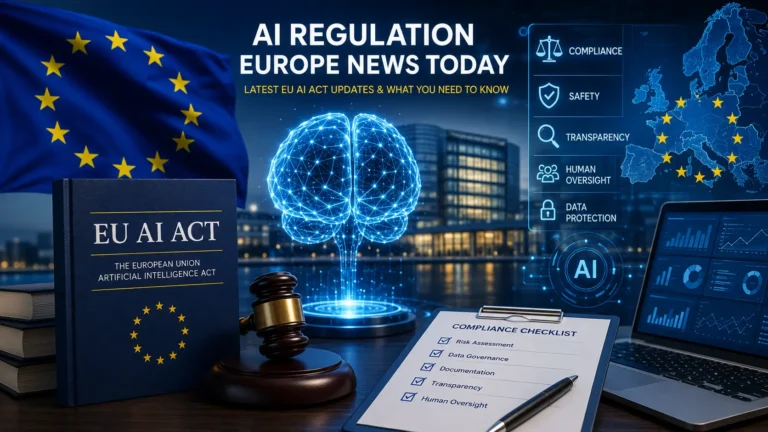
The EU AI Act introduces a risk-based framework for artificial intelligence systems. Instead of regulating all AI equally, it categorizes systems into levels of risk. Official documentation on the European Union AI Act Portal highlights tight timelines for synthetic media transparency rolling out by late 2026.
Minimal Risk AI
These systems face limited restrictions. Examples include spam filters, AI gaming systems, and recommendation engines.
Limited Risk AI
These tools require basic transparency obligations. For example, chatbots, AI-generated content systems, and virtual assistants. Users must be disclosed that they’re interacting with AI. Enterprise updates across AI regulation news today EU US panels indicate that user notification systems must be hardcoded by default.
High-Risk AI
This is where regulations become much stricter. Examples include AI systems used for hiring, healthcare, law enforcement, education scoring, and financial services. Requirements include risk assessments, human oversight, technical documentation, bias mitigation, and active monitoring systems.
Prohibited AI Practices
Some AI applications face outright bans. That includes manipulative AI systems, exploitative surveillance, social scoring, and—following new 2026 amendments—non-consensual AI-generated intimate content. This section of the EU AI Act continues evolving rapidly to patch protection gaps. Keeping an eye on AI regulation news today EU US feeds ensures you don’t accidentally deploy banned features.
How the US AI Approach Differs
The US strategy feels more decentralized. Instead of one unified AI law, regulation currently involves federal agencies, state governments, industry frameworks, and recent executive updates like the 2026 White House National Policy Framework for AI issued via the Official White House Administration Briefings.
Google, Microsoft, OpenAI, Meta, and Amazon continue participating heavily in policy discussions, especially around AI safety, responsible deployment, and cybersecurity standards. When reading AI regulation news today EU US, the US approach tends to prioritize innovation flexibility, private sector collaboration, and market competitiveness, while the EU approach leans more heavily toward consumer protection, precautionary oversight, and centralized governance.
Neither system is perfect. And honestly, global companies tracking AI regulation news today EU US updates may eventually need compliance strategies for both simultaneously.
Industries Most Affected
Healthcare
AI-powered diagnostics and patient systems face increasing scrutiny. Bias, safety, and explainability concerns are massive here.
Finance
Financial AI systems involving lending, fraud detection, credit scoring, and investment automation are already attracting intense regulatory attention across global AI regulation news today EU US briefs.
HR and Recruitment
AI hiring systems became one of the earliest controversial use cases. Regulators worry about discrimination, biased screening, unfair rankings, and completely opaque automated decisions.
AI Content Platforms
AI-generated content tools now face questions around copyright, misinformation, synthetic media disclosure, and moderation responsibilities. This affects many AI productivity and AI marketing platforms directly. Teams leveraging the top AI tools for commercial growth must build internal transparency frameworks to survive platform shifts driven by AI regulation news today EU US updates.
AI Compliance Challenges for Businesses
Most companies still aren’t fully prepared. That’s the reality. Common problems include unclear AI inventories, weak documentation, inconsistent governance, third-party AI dependencies, and limited internal expertise. Staying ahead of weekly AI regulation news today EU US bulletins helps engineering teams catch shifting standards early.
And things become even more complicated when companies use multiple AI vendors across workflows. For example, balancing OpenAI APIs, Microsoft Copilot integrations, Google Gemini systems, AI automation platforms, and third-party content generation tools introduces multi-layered compliance considerations.
AI Governance vs AI Regulation
People often confuse these concepts. But they’re not identical.
| AI Governance | AI Regulation |
|---|---|
| Internal company policies | Government laws |
| Risk management | Legal compliance |
| Ethical frameworks | Enforcement rules |
| Operational oversight | Regulatory obligations |
| Best practices | Mandatory standards |
Good governance usually makes regulatory compliance easier. Companies building AI systems responsibly today and cross-referencing global AI regulation news today EU US frameworks will likely adapt faster as regulations evolve across global jurisdictions.
How Companies Are Adapting
Building AI Governance Teams
Larger companies now hire AI compliance officers, governance specialists, AI ethics advisors, and policy analysts. Processing regional AI regulation news today EU US trends is becoming a legitimate career niche surprisingly fast.
Auditing AI Systems
Organizations increasingly audit datasets, bias risks, model outputs, transparency practices, and third-party vendors—especially in heavily regulated industries.
Improving Documentation
Documentation is suddenly becoming valuable again. Not exciting, obviously, but necessary. Many companies now maintain AI usage inventories, risk logs, model documentation, and detailed vendor assessments to survive audits.
Tools Helping with AI Compliance
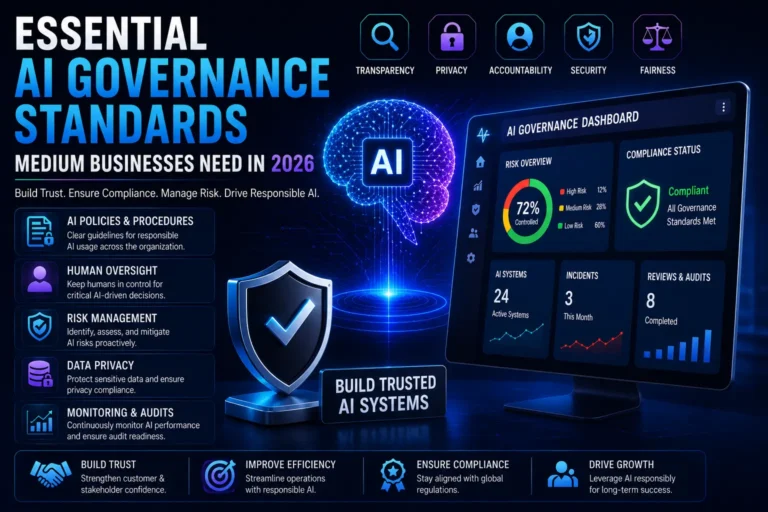
Several platforms now focus on AI governance, model monitoring, compliance reporting, risk management, and documentation automation. Traditional enterprise software companies like Microsoft and IBM are expanding heavily into this space to match AI regulation news today EU US workflow updates.
Meanwhile, newer AI-focused startups are building specialized compliance systems around AI risk analysis, policy automation, governance workflows, and regulatory tracking. This niche is projected to grow dramatically over the next few years.
Future Predictions for AI Regulation
Global Standards Will Expand
More countries will probably introduce AI transparency rules, accountability frameworks, and governance requirements. Breaking AI regulation news today EU US trends indicate that the EU AI Act will continue to influence international legislation significantly.
Enterprise AI Compliance Will Become Normal
Eventually, AI compliance may resemble GDPR compliance, cybersecurity audits, or financial reporting standards: routine but entirely mandatory.
AI Governance Software Will Grow Fast
Companies will need dedicated enterprise tools for monitoring, documentation, auditing, risk scoring, and compliance workflows. That shifts huge financial opportunities toward SaaS compliance providers.
FAQ
What is the EU AI Act?
The EU AI Act is Europe’s major regulatory framework for artificial intelligence systems. It categorizes AI systems based on risk levels and introduces compliance obligations for higher-risk applications.
Why is AI regulation important?
AI regulation aims to reduce risks involving bias, misinformation, privacy violations, discrimination, and unsafe automated decision-making.
Is the US creating AI laws too?
Yes. The US is increasingly expanding AI oversight through federal agency updates, state-level initiatives (like California and Colorado’s AI frameworks), and industry standards.
Which industries face the biggest AI compliance risks?
Healthcare, finance, recruitment, cybersecurity, and AI content generation currently face the strongest regulatory attention.
What is AI governance?
AI governance refers to internal policies and oversight systems companies use to manage AI responsibly and reduce operational risks.
Final Thoughts
The growing interest around AI regulation news today EU US reflects something bigger than policy headlines. AI is becoming infrastructure. And once technology reaches that level of influence, regulation becomes inevitable.
The European Union is pushing faster toward centralized oversight. The United States remains more fragmented but increasingly active. Meanwhile, businesses everywhere are trying to balance innovation, compliance, transparency, and competitiveness.
That won’t be easy. But companies that start building strong AI governance systems early will probably adapt far better than those waiting until regulations become unavoidable. And honestly, that transition already feels underway.
Accelerate Your Search Visibility
Ready to upgrade your content workflow and master semantic SEO? Discover our vetted, strategic blueprints to systematically improve your online presence.
Explore AI Blueprints