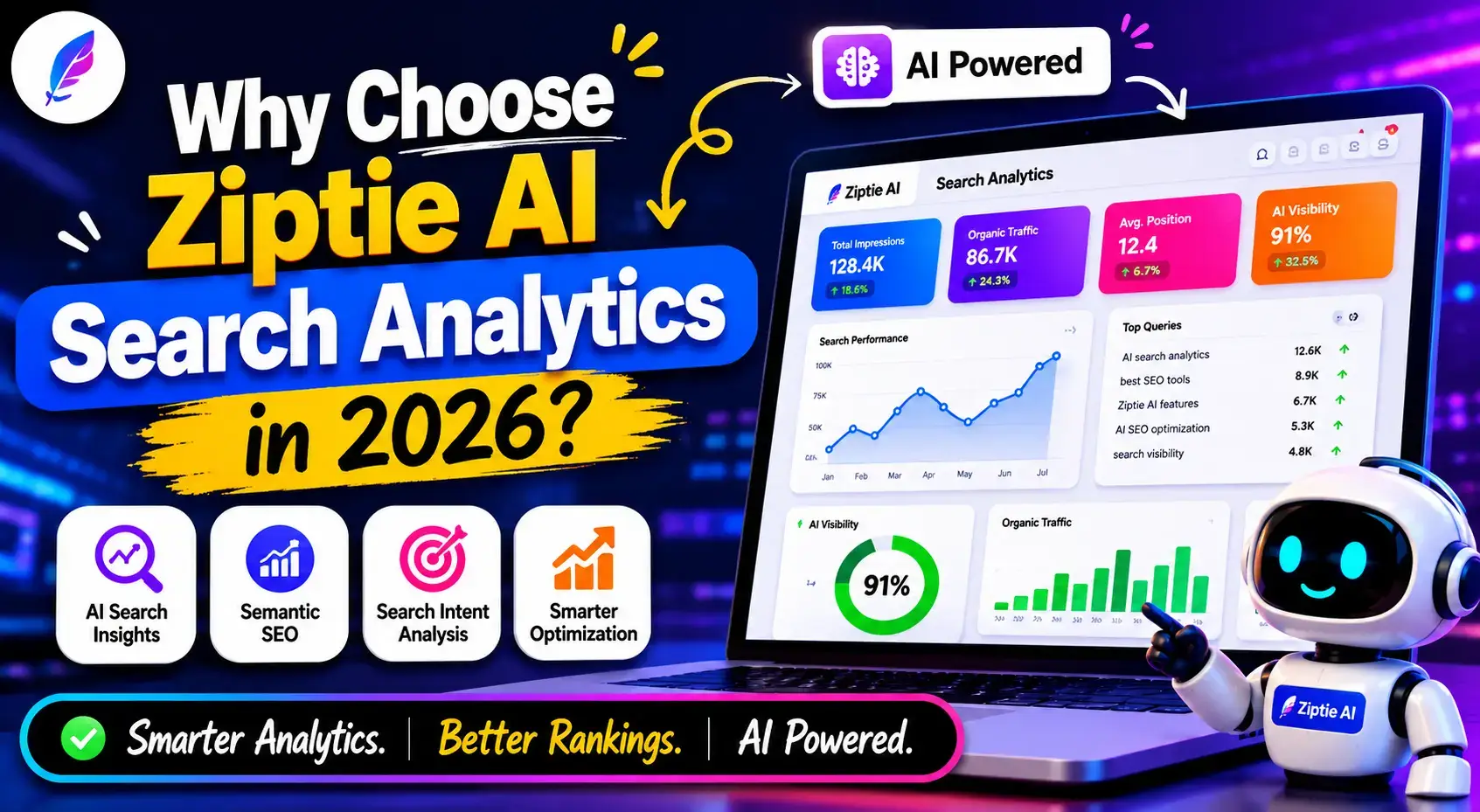
Why Choose Ziptie AI Search Analytics in 2026?
Search optimization doesn’t look the same anymore. A few years ago, ranking content was mostly about keywords, backlinks, and technical SEO fixes. Those things still matter, obviously. But modern search engines are becoming far more context-aware, especially with AI-powered search experiences now shaping how users discover information online.
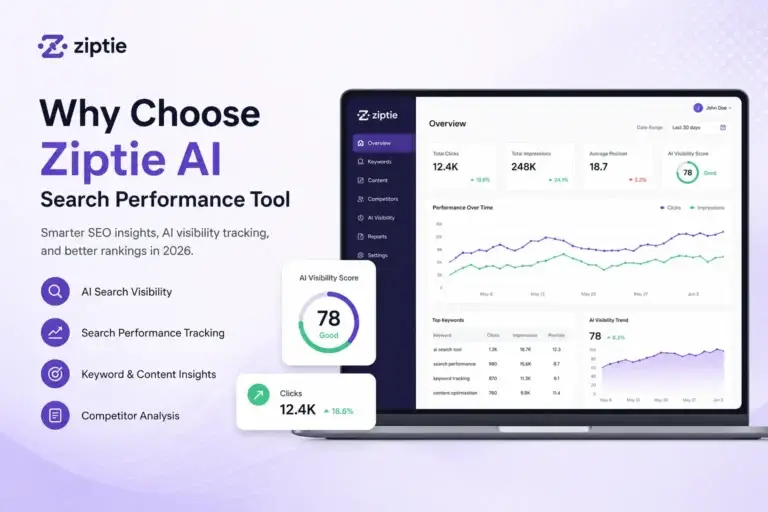
That shift is exactly **why choose ziptie ai search analytics** as a vital component for growth teams. Instead of focusing only on traditional rankings and keyword positions, the platform leans more into semantic SEO, AI-driven search behavior, and content intelligence. For content creators, affiliate marketers, SaaS companies, and freelancers trying to adapt to AI-first search ecosystems, that approach feels increasingly relevant.
And honestly, that’s probably the biggest reason people are curious about it right now. This guide breaks down what this platform actually does, where it stands out, where it still feels limited, and whether you should consider **why choose ziptie ai search analytics** to optimize your SEO workflow in 2026.
What Is Ziptie AI Search Analytics?
Ziptie AI Search Analytics is an AI-focused search intelligence platform designed to help users understand how their content performs across modern search environments. That includes semantic search, AI-generated search summaries, conversational search behavior, topical relevance, and search intent patterns.
Traditional SEO tools like Ahrefs Data Suites still dominate technical SEO and backlink analysis. But platforms built around AI search visibility are starting to fill a different gap. If you wonder **why choose ziptie ai search analytics**, it seems designed specifically for users who care about AI SEO, content optimization, semantic authority, topical clustering, and search intent alignment. In practice, it feels less like a classic ranking tracker and more like a modern content intelligence platform.
To integrate this effectively into your workflows, deploying a structured setup like our specialized Ziptie AI tool framework helps systematically clear out technical barriers that standard dashboards overlook.
Why AI Search Analytics Matters Today
Search engines have changed dramatically over the past few years. Google now relies heavily on natural language processing, entity understanding, contextual relevance, and search intent interpretation. Meanwhile, advanced search layers powered by OpenAI LLM models and conversational engines continue changing how people interact with information online.
That matters because users are no longer searching in short robotic phrases only. They ask conversational questions, detailed comparisons, contextual queries, and problem-solving prompts. And AI systems attempt to summarize the best answers instantly. If your content strategy still revolves around exact-match keyword repetition alone, you’re probably already seeing diminishing returns in competitive niches. That reality explains **why choose ziptie ai search analytics** to manage your site’s ongoing visibility trends.
Main Reasons to Choose Ziptie AI Search Analytics
1. It’s Built Around Modern Search Behavior
One of the biggest differences with Ziptie is its focus on AI-era search patterns. Instead of obsessing only over rankings, the platform tries to analyze semantic relevance, entity relationships, contextual alignment, conversational intent, and AI visibility trends. That broader perspective feels more aligned with where SEO is heading. Especially if your website focuses on AI tools, SaaS reviews, AI productivity, AI automation, affiliate marketing, or online business content, it’s clear **why choose ziptie ai search analytics** for early strategy audits.
2. Cleaner and Easier Reporting
A lot of SEO dashboards feel unnecessarily overwhelming. You open them and instantly get flooded with dozens of tabs, technical metrics, crawl reports, backlink graphs, and ranking fluctuations. Ziptie appears more streamlined. The reporting feels focused on actionable insights instead of endless raw data. That’s particularly helpful for solo bloggers, freelancers, startup teams, and small agencies. If you’ve tested enterprise SEO tools before, you probably know how easy it is to spend hours digging through reports without taking meaningful action.
3. Better Semantic SEO Insights
Semantic SEO has become incredibly important. Modern search engines increasingly evaluate topic relationships, contextual depth, supporting entities, and content completeness. Ziptie AI Search Analytics leans heavily into this area. For example, instead of simply suggesting one keyword variation, it may help uncover related topical clusters, supporting search intent, semantic gaps, and contextual opportunities. That’s valuable because topical authority usually performs better long term than isolated keyword targeting.
4. Useful for Content Scaling
Scaling content gets messy fast. Once websites publish dozens or hundreds of articles, maintaining topical structure becomes harder than most people expect. Ziptie can help organize content clusters, semantic relationships, supporting articles, and internal linking opportunities. That structure matters a lot for websites focused on passive income with AI, AI marketing, freelancing, SaaS education, or niche authority building. When scaled up, leveraging the best AI tools for content creation ensures a seamless delivery flow right into these multi-layered analytics systems.
Core Features Explained
AI Search Visibility Tracking
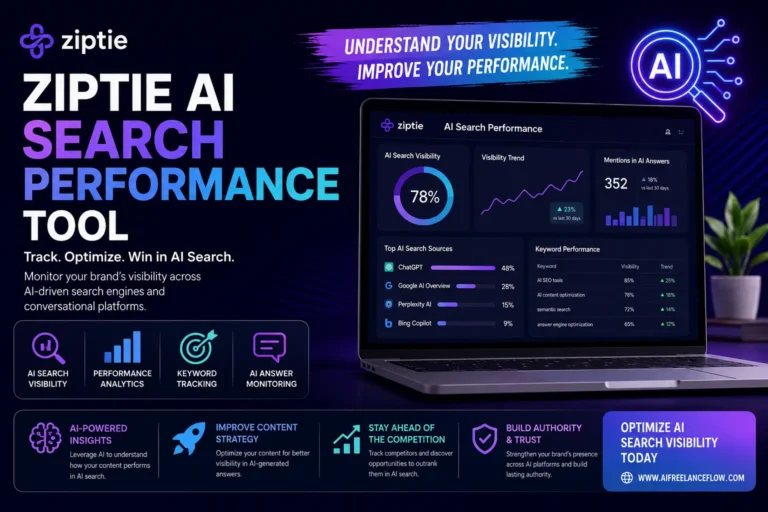
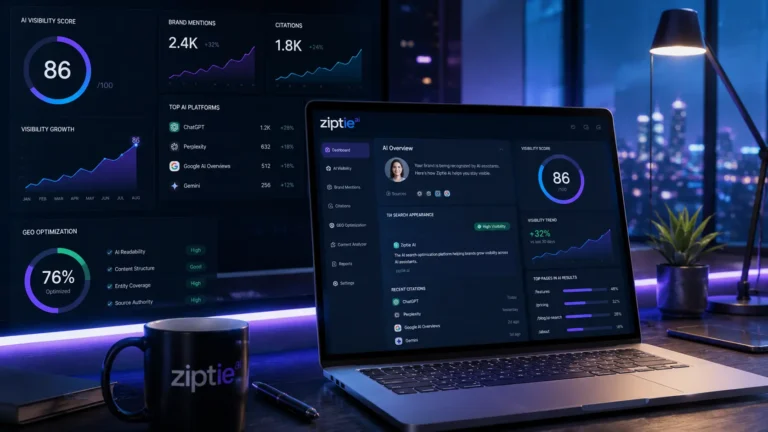
This feature focuses on how content appears across evolving AI-driven search environments. Instead of only tracking rankings, it attempts to measure visibility patterns, semantic alignment, and AI interpretation trends. That’s becoming increasingly relevant as Google continues integrating AI-generated summaries directly into search results. This is exactly **why choose ziptie ai search analytics** if you want to stay ahead of upcoming algorithm changes.
Search Intent Analysis
Search intent optimization is no longer optional. Publishing content that mismatches user intent usually leads to low engagement, poor click-through rates, reduced dwell time, and weaker conversions. Ziptie helps categorize content based on informational intent, commercial intent, transactional intent, and navigational intent. And honestly, many traditional tools still struggle with accurate intent classification.
Topic Cluster Discovery
This feature helps identify related subtopics and supporting content opportunities. For example, a page targeting AI SEO tools might also benefit from supporting content around AI content optimization, semantic SEO, AI automation workflows, AI productivity systems, and conversational search optimization. That broader ecosystem strengthens topical authority naturally, letting you easily map out historical shifts like the Drovenio AI tools 2025 roadmap to dominate long-tail intent early.
Competitor Visibility Analysis
Like most SEO platforms, Ziptie also includes competitive insights. You can analyze competitor content coverage, semantic gaps, ranking opportunities, and visibility trends. Nothing revolutionary there, but still useful when combined with AI-focused analytics.
Advanced Dashboard Navigation
Evaluating enterprise interfaces shouldn’t take days of training. When considering your optimization tooling, understanding **why choose ziptie ai search analytics** comes down to layout simplicity and clear data processing. The platform isolates data noise, giving clean recommendations for ongoing content scaling.
Ziptie vs Traditional SEO Platforms
| Feature | Ziptie AI Search Analytics | Traditional SEO Tools |
|---|---|---|
| AI Search Focus | Strong | Moderate |
| Semantic SEO Insights | Advanced | Basic to Medium |
| Keyword Tracking | Good | Excellent |
| Backlink Analysis | Limited | Advanced |
| Technical SEO | Moderate | Strong |
| Search Intent Analysis | Strong | Mixed |
| Beginner Friendly | High | Medium |
| AI Visibility Monitoring | Strong | Rare |
Best Use Cases
- Freelancers: Freelancers managing AI SEO campaigns can use Ziptie for faster topic research, semantic optimization, content planning, and intent analysis.
- Affiliate Marketers: Affiliate websites increasingly rely on topical authority instead of thin review content. Ziptie can help uncover supporting article ideas, commercial content gaps, and semantic opportunities.
- SaaS Companies: SaaS brands often struggle with content scaling and topical expansion. Understanding exactly **why choose ziptie ai search analytics** can improve content prioritization, semantic coverage, search intent targeting, and internal linking strategy.
- Content Agencies: Agencies handling multiple websites may appreciate simplified reporting, semantic topic mapping, and AI-focused search insights.
Pros and Cons
Pros
- Strong semantic SEO focus
- Beginner-friendly interface
- Helpful content intelligence features
- Useful for AI-focused websites
- Better intent analysis than many basic tools
Cons
- Not as mature as legacy SEO suites
- Backlink analysis feels limited
- Technical SEO tools aren’t its strongest area
- Advanced users may want deeper reporting customization
How Beginners Can Use It
If you’re new to AI SEO, don’t try to master everything immediately. A smarter approach is to start with search intent analysis, build topic clusters, improve semantic coverage, strengthen internal linking, and expand contextual relevance naturally. One mistake beginners often make is chasing hundreds of disconnected keywords. In reality, search engines increasingly reward topical depth, contextual expertise, and semantic completeness. When looking at **why choose ziptie ai search analytics** for beginners, the platform’s layout naturally encourages that specific structural growth.
Advanced SEO Insights
Modern SEO is becoming increasingly connected to entity recognition, contextual understanding, natural language processing, and user behavior interpretation. Google, OpenAI, Microsoft, HubSpot, and Semrush are all moving toward more intelligent search ecosystems. That means future-proof SEO probably looks more like topic ecosystems, semantic relationships, intent satisfaction, and content usefulness, and less like repeating one keyword twenty times. Honestly, that older strategy already feels outdated in most serious niches.
Is Ziptie AI Search Analytics Worth It?
For many modern publishers, yes. Especially if you publish AI-related content, focus on semantic SEO, build affiliate websites, manage SaaS blogs, care about AI search visibility, and want cleaner analytics workflows. Still, figuring out **why choose ziptie ai search analytics** reveals it is best viewed as a complementary platform rather than a full replacement for enterprise SEO suites. At least for now. Many users will likely combine it with traditional tools for backlink analysis, technical SEO audits, and advanced rank tracking. That hybrid approach honestly makes the most sense today.
FAQ
What is Ziptie AI Search Analytics used for?
It helps analyze AI-driven search visibility, semantic SEO opportunities, search intent alignment, and content performance trends.
Is Ziptie AI Search Analytics beginner friendly?
Yes. Its interface appears easier to navigate than many enterprise-level SEO platforms.
Does Ziptie replace Semrush or Ahrefs?
Not completely. Traditional platforms still provide stronger backlink analysis and technical SEO features. Ziptie focuses more heavily on AI search intelligence and semantic optimization.
Why choose Ziptie AI Search Analytics over legacy tools?
Because search engines increasingly evaluate context, relationships between topics, and user intent instead of relying only on exact-match keywords.
Can AI search analytics improve rankings?
Indirectly, yes. Better semantic optimization and intent alignment can improve content quality signals and overall search visibility.
Final Thoughts
The biggest reason people are exploring Ziptie AI Search Analytics right now is simple: Search behavior is evolving fast. Traditional SEO metrics still matter, but they no longer tell the full story. Modern search engines increasingly prioritize contextual relevance, semantic depth, topical authority, and conversational usefulness.
Ziptie seems designed around that reality. It’s not perfect, and it probably won’t replace every traditional SEO tool overnight. But for creators, freelancers, SaaS brands, and affiliate marketers trying to adapt to AI-first search ecosystems, identifying **why choose ziptie ai search analytics** offers a more modern perspective on optimization. And honestly, that alone makes it worth paying attention to in 2026.
Accelerate Your Search Visibility
Ready to upgrade your content workflow and master semantic SEO? Discover our vetted, strategic blueprints to systematically improve your online presence.
Explore AI Blueprints