Best PPC Bid Management Tools in 2026: Complete Guide for Smarter Ad Optimization
Introduction
Pay-per-click advertising has become significantly more complex over the last few years.
Rising competition, increasing cost-per-click rates, privacy changes, AI-powered advertising systems, and evolving customer behavior have forced advertisers to become more strategic than ever.
Years ago, a PPC specialist could manually adjust keyword bids and maintain strong performance.
Today, that approach rarely scales.
Modern campaigns may contain:
- Thousands of keywords
- Multiple audience segments
- Various device types
- Different geographic locations
- Multiple advertising platforms
This complexity is exactly why ppc bid management tools have become essential.
These platforms help advertisers automate bidding decisions, optimize ad spend, improve return on ad spend (ROAS), and reduce manual workload.
However, choosing the wrong platform can be expensive.
Some tools are designed for enterprise organizations spending millions of dollars annually.
Others are ideal for agencies, eCommerce brands, SaaS companies, and small businesses.
This guide explores the best ppc bid management tools available in 2026, how they work, who they are best suited for, and what practical considerations matter before investing in one.
Table of Contents
- What Are PPC Bid Management Tools?
- Why PPC Bid Management Matters in 2026
- My Experience With PPC Automation
- How Automated Bid Management Works
- Best PPC Bid Management Tools
- Pricing Considerations
- Tool Comparisons
- Alternatives
- Implementation Strategy
- FAQ
- Final Verdict
What Are PPC Bid Management Tools?
Quick Answer
PPC bid management tools are software platforms that automate, monitor, and optimize advertising bids based on campaign goals and performance data.
Definition
These tools analyze metrics such as:
- Cost Per Click (CPC)
- Cost Per Acquisition (CPA)
- Conversion Rate
- Return On Ad Spend (ROAS)
- Impression Share
- Audience Behavior
- Historical Performance
The software then automatically adjusts bids to improve results.
Instead of manually reviewing hundreds or thousands of keywords every day, advertisers can allow algorithms to optimize bids continuously. To see how automation fits into the bigger picture, check out our guide on the top AI tools.
Common Goals
Most advertisers use bid management software to:
- Increase conversions
- Lower CPA
- Improve ROAS
- Scale campaigns
- Save time
- Improve efficiency
Why This Matters
Manual bidding is becoming less practical.
A campaign with 5,000 keywords can generate millions of possible bidding decisions every month.
No human can realistically process that amount of data as quickly as a machine-learning system built into advanced ppc bid management tools.
Why PPC Bid Management Matters in 2026
Quick Answer
Advertising platforms have become more automated, but bid management remains critical for maximizing performance and protecting budgets. Selecting the right ppc bid management tools ensures your budget is allocated efficiently.
The Growing Complexity Problem
Modern advertisers face several challenges:
| Challenge | Impact |
|---|---|
| Rising CPCs | Increased costs |
| More Competition | Reduced margins |
| Multiple Platforms | Higher complexity |
| Audience Fragmentation | More targeting decisions |
| AI Search Changes | New optimization requirements |
One thing many advertisers overlook is that automation doesn’t eliminate strategy.
It simply changes where marketers spend their time.
Instead of manually adjusting bids, successful advertisers focus on:
- Conversion tracking
- Audience segmentation
- Landing page optimization
- Creative testing
- Customer acquisition strategy
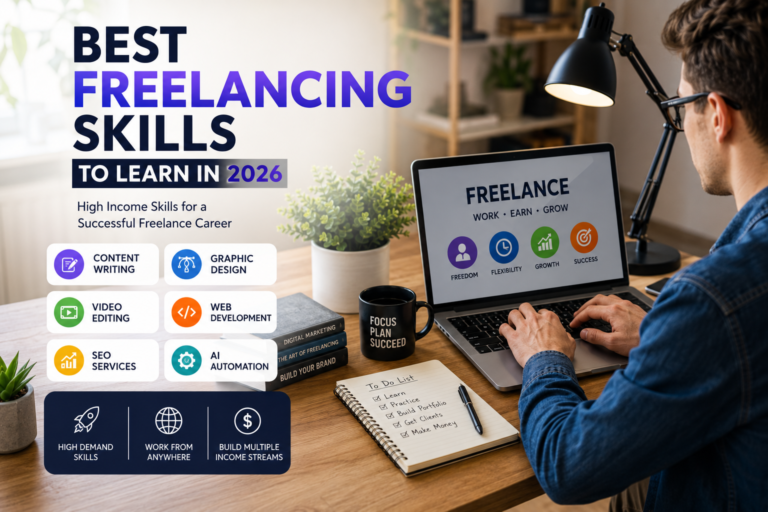
Staying ahead means mastering the best freelancing skills to learn in digital marketing.
Why Manual Management Is Becoming Obsolete
Consider an eCommerce store running:
- Google Search Campaigns
- Shopping Campaigns
- Performance Max
- Microsoft Ads
- Remarketing Campaigns
Managing bids manually across all those channels becomes extremely difficult.
Automation helps advertisers react faster than competitors. Deploying dedicated ppc bid management tools makes a noticeable difference in scaling speed.
My Experience With PPC Automation
Practical Perspective
If I were managing a small business account today, I would not immediately invest in expensive enterprise PPC software.
This is one of the biggest mistakes many advertisers make.
They assume better software automatically creates better results.
The reality is usually different.
For smaller advertisers spending:
- $500/month
- $1,000/month
- $3,000/month
Google Smart Bidding often provides enough automation to achieve strong performance without additional ppc bid management tools.
However, once budgets increase and campaigns become more complex, third-party ppc bid management tools start offering significant advantages.
From a practical standpoint, I would typically recommend:
Small Businesses
- Google Smart Bidding
- Microsoft Automated Bidding
Growing Agencies
- Optmyzr
Enterprise Organizations
- Marin Software
- Skai
The goal is matching the software to the complexity of your advertising operation.
How Automated Bid Management Works
Quick Summary
Most PPC bid management platforms follow a similar workflow:
Step 1: Collect Data
The system gathers information about:
- Clicks
- Conversions
- Costs
- Revenue
- Audience signals
Step 2: Analyze Performance
The platform evaluates:
- Which keywords perform best
- Which audiences convert
- Which locations generate revenue
Step 3: Compare Against Goals
Common goals include:
- Target CPA
- Target ROAS
- Maximum Conversions
- Maximum Clicks
Step 4: Adjust Bids Automatically
The software increases or decreases bids based on performance data.
Step 5: Continuous Optimization
Unlike manual bidding, the process never stops.
Optimization happens continuously across your chosen ppc bid management tools.
Typical Optimization Signals
| Signal | Example |
|---|---|
| Device | Mobile vs Desktop |
| Location | Country, City, Region |
| Time of Day | Morning vs Evening |
| Audience | New vs Returning Users |
| Conversion History | Past Purchases |
| Competition | Auction Dynamics |
Machine learning systems can process thousands of signals simultaneously.
This allows them to identify patterns humans often miss.
Best PPC Bid Management Tools
Not every platform serves the same type of advertiser.
Some focus on enterprise-scale campaigns.
Others are better suited to agencies or small businesses.
Let’s examine the strongest options available in 2026.
1. Optmyzr
OptmyzrBest For
- PPC Agencies
- Freelance PPC Consultants
- Advanced Advertisers
- Mid-Sized Businesses
Quick Overview
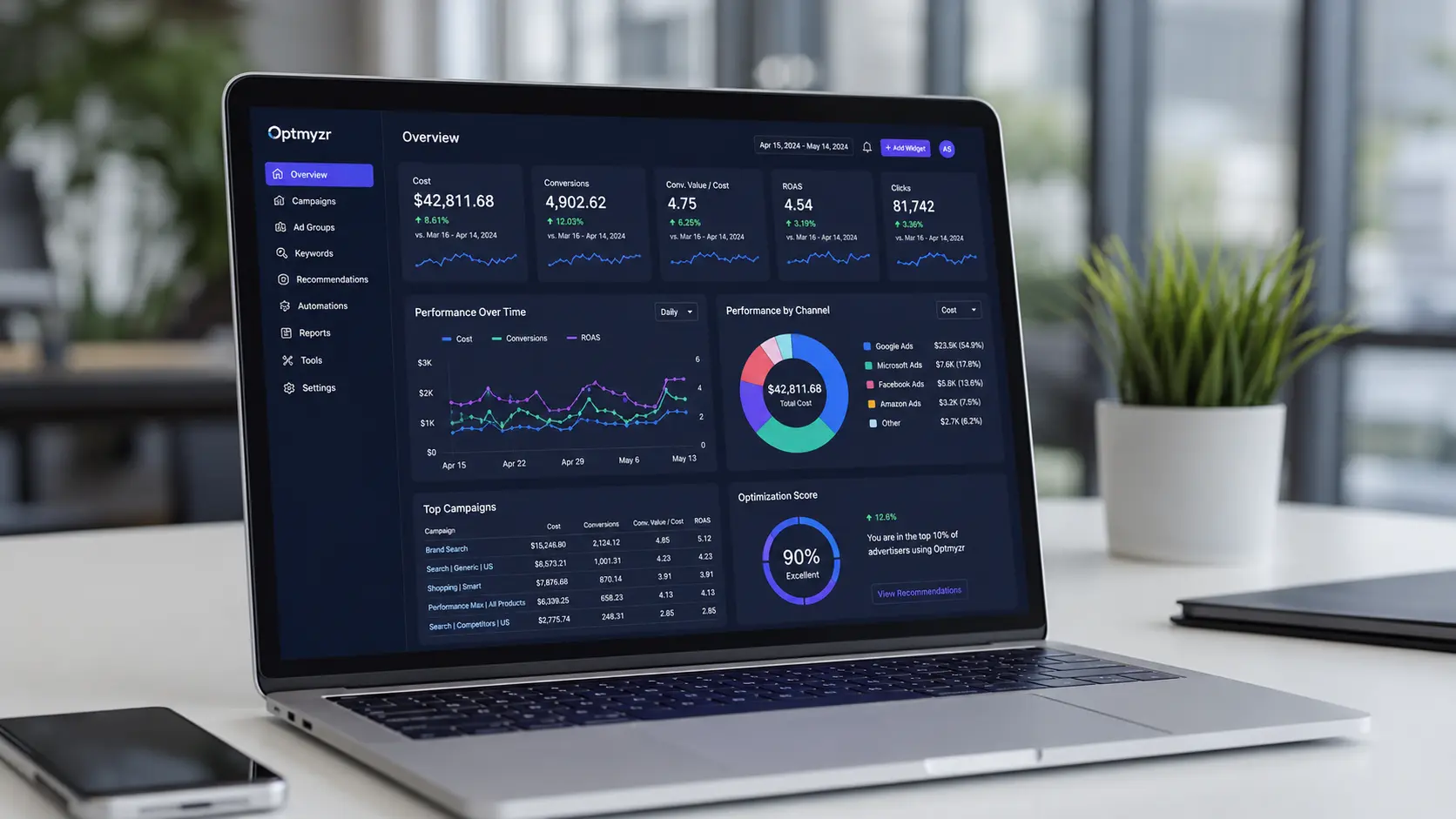
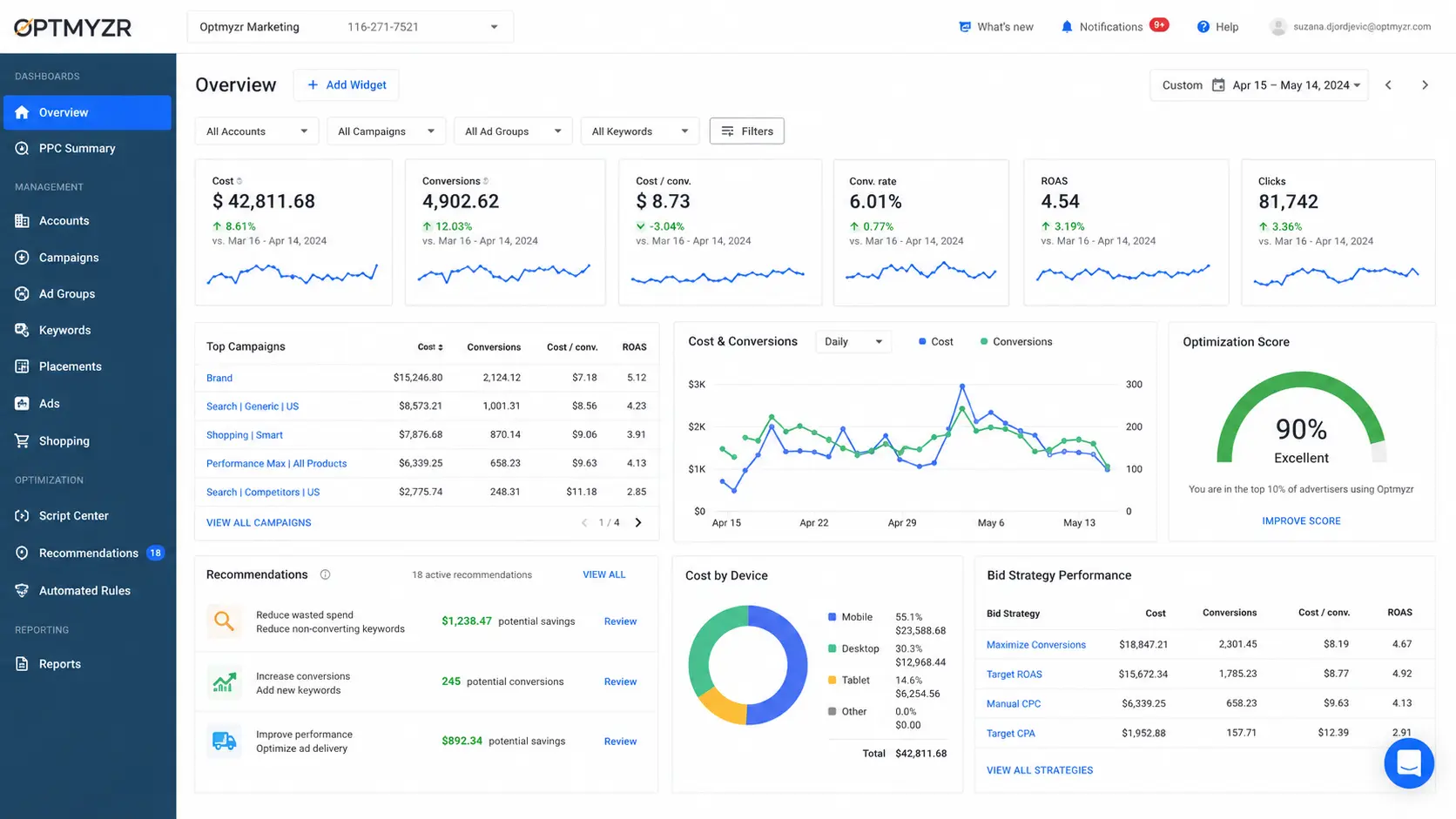
Optmyzr has become one of the most respected ppc bid management tools in the industry.
Unlike purely automated solutions, it combines automation with human control.
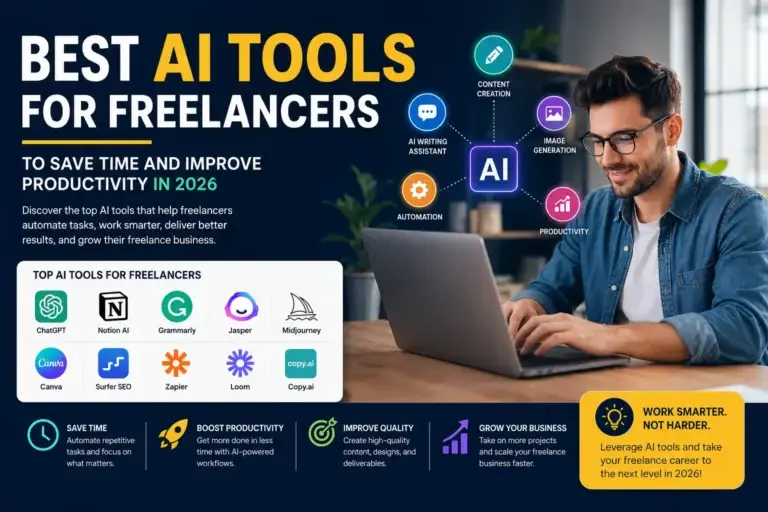
This balance makes it attractive for advertisers who want efficiency without giving up strategic oversight. For professionals optimizing their time, integrating the best AI tools for freelancers can scale operations further.
Key Features
- Rule-Based Automation
- Bid Management
- Budget Monitoring
- Campaign Audits
- Advanced Reporting
- Performance Alerts
- Optimization Suggestions
What Makes Optmyzr Different?
Many PPC tools focus only on automation.
Optmyzr focuses on decision support.
Rather than completely replacing human management, it helps advertisers make smarter decisions faster.
Advantages
✅ Strong automation capabilities
✅ Excellent reporting
✅ Agency-friendly workflows
✅ Budget management tools
✅ Advanced optimization features
✅ Supports large account structures
Potential Limitations
❌ Learning curve for beginners
❌ Can feel overwhelming initially
❌ Additional software cost beyond ad spend
Ideal User
Optmyzr is often a strong fit for agencies managing multiple client accounts simultaneously.
2. Marin Software
Best For
- Enterprise Teams
- Large Brands
- Global Advertising Operations
Quick Overview
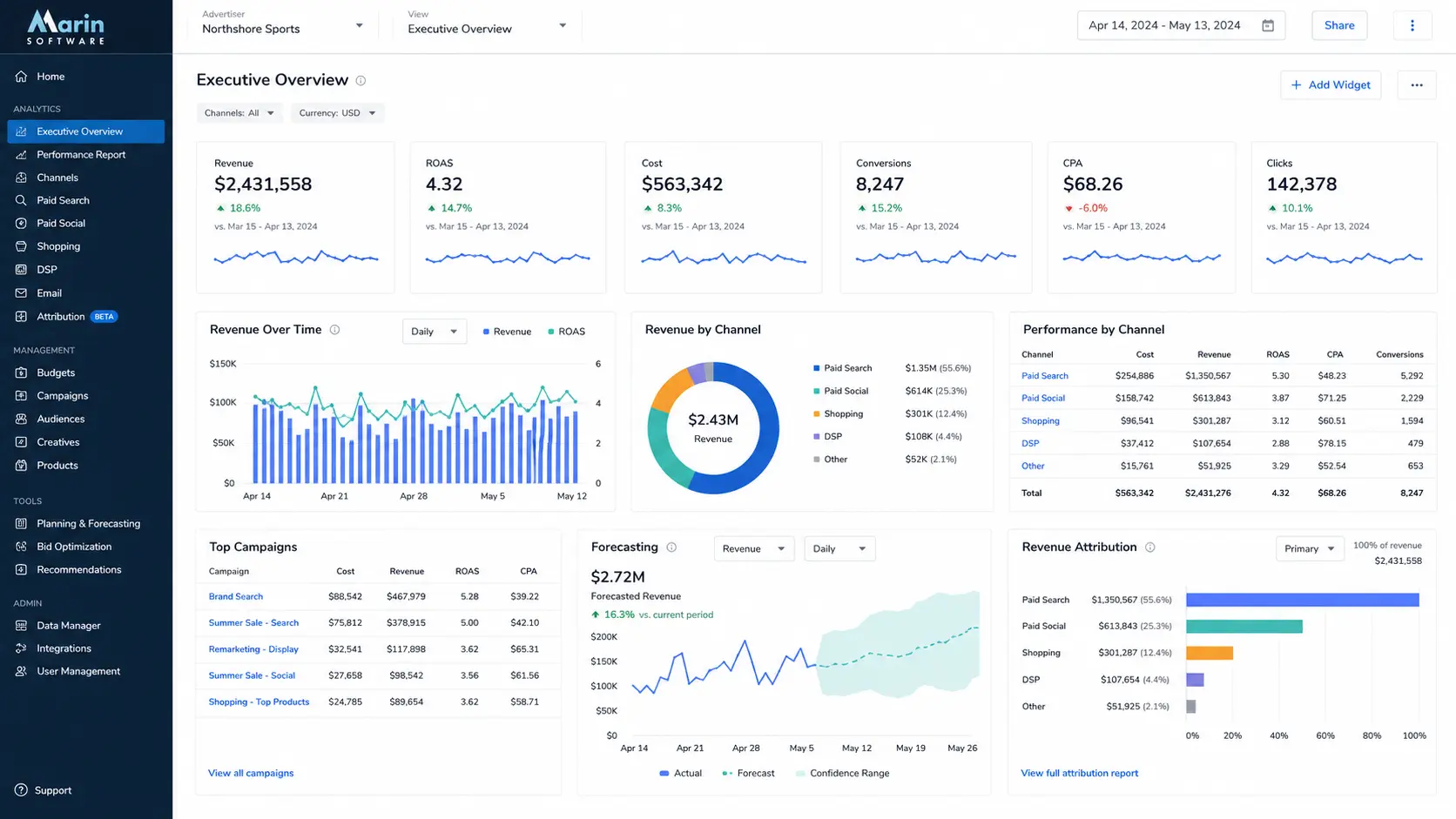
Marin Software has been one of the most established names in bid management for years.
It is widely recognized among elite ppc bid management tools.
It is designed primarily for organizations managing significant advertising budgets across multiple channels.
Where Google Smart Bidding focuses mainly on Google’s ecosystem, Marin offers broader cross-channel management capabilities.
Key Features
- Enterprise Bid Optimization
- Cross-Channel Campaign Management
- Advanced Forecasting
- Revenue Attribution
- Enterprise Reporting
- Large-Scale Budget Management
Why Enterprise Brands Choose Marin
Large organizations often need:
- Centralized reporting
- Cross-platform visibility
- Forecasting tools
- Budget governance
Marin helps solve these challenges.
Advantages
✅ Excellent enterprise scalability
✅ Advanced forecasting
✅ Multi-channel support
✅ Strong reporting capabilities
✅ Large-account management
Potential Limitations
❌ Higher cost
❌ Not ideal for beginners
❌ May be excessive for smaller advertisers
Ideal User
Marin Software is best suited for:
- Enterprise Brands
- Large eCommerce Companies
- Global Marketing Teams
- Organizations Managing Millions In Ad Spend
3. Skai
Best For
- Large Brands
- Retail Advertisers
- Enterprise Marketing Teams
- Multi-Channel Campaign Management
Quick Overview
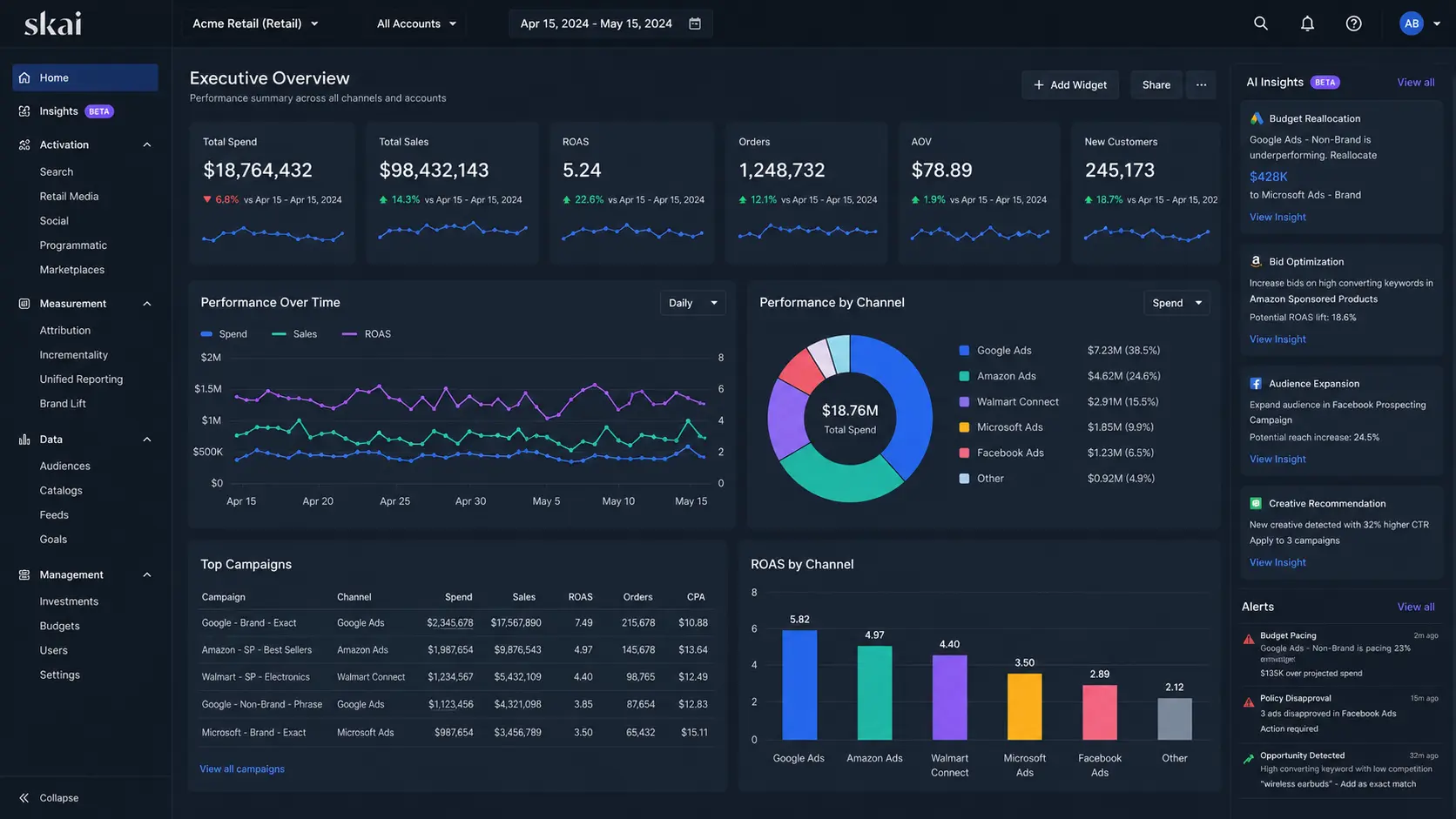
Skai, formerly Kenshoo, is one of the strongest enterprise advertising platforms available today.
It is a strong choice for multi-channel ppc bid management tools.
Unlike tools focused primarily on Google Ads, Skai helps advertisers manage multiple advertising channels from a centralized platform.
This includes:
- Google Ads
- Microsoft Ads
- Amazon Ads
- Retail Media Networks
- Social Advertising Platforms
For organizations managing large advertising budgets across multiple channels, this level of visibility can be extremely valuable. To learn how to automate other channels like freelancing platforms, check out our guide on Upwork proposal automation.
Key Features
- AI-Powered Optimization
- Retail Media Management
- Cross-Channel Reporting
- Budget Allocation Tools
- Predictive Analytics
- Enterprise Forecasting
Advantages
✅ Excellent for large brands
✅ Strong AI optimization capabilities
✅ Multi-channel campaign management
✅ Advanced reporting
✅ Retail media support
Potential Limitations
❌ Expensive for smaller advertisers
❌ Requires training
❌ Too advanced for most beginners
Ideal User
Skai is best suited for:
- National Brands
- Enterprise Retailers
- Large eCommerce Companies
- Marketing Teams Managing Multiple Platforms
4. Google Ads Smart Bidding
Best For
- Beginners
- Small Businesses
- Local Businesses
- Growing Advertisers
Quick Overview
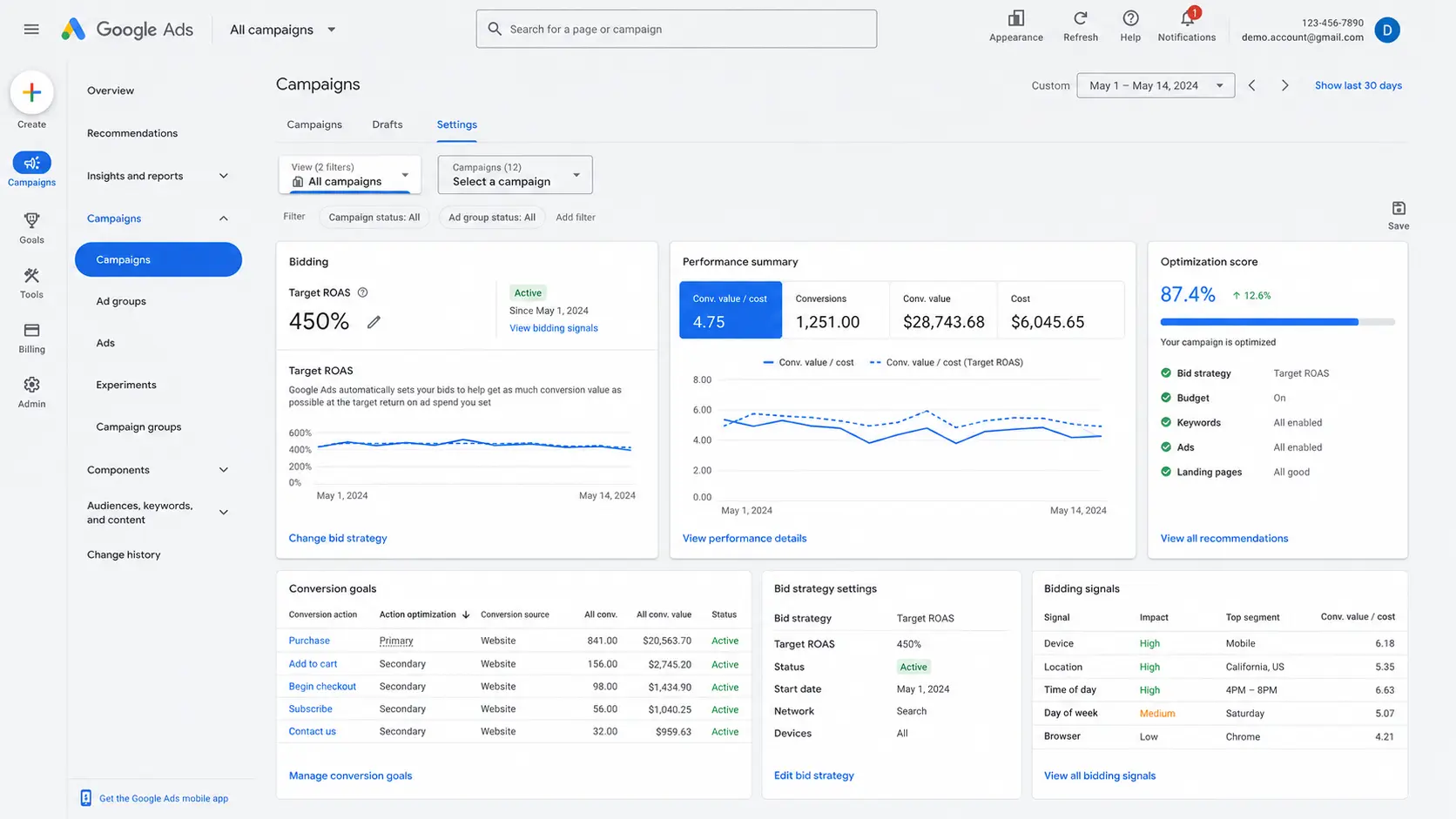
Google Ads Smart Bidding is often the best starting point for most advertisers.
Unlike third-party ppc bid management tools, Smart Bidding is built directly into Google Ads.
There is:
- No additional software cost
- No complex setup
- No integration requirements
This makes it particularly attractive for smaller advertisers.
Available Smart Bidding Strategies
Target CPA
Optimizes bids to achieve a desired cost per acquisition.
Target ROAS
Focuses on maximizing revenue while maintaining profitability goals.
Maximize Conversions
Attempts to generate the highest possible number of conversions.
Maximize Conversion Value
Optimizes for revenue rather than conversion volume.
Enhanced CPC
Combines manual bidding with automated adjustments.
Advantages
✅ Free with Google Ads
✅ Easy implementation
✅ Strong machine learning
✅ Suitable for most advertisers
✅ Continuously improving
Potential Limitations
❌ Less transparency
❌ Limited customization
❌ Less control than advanced platforms
My Recommendation
If you’re spending less than:
- $5,000/month
- $10,000/month
Google Smart Bidding is often sufficient. Many advertisers invest in expensive software before fully utilizing Google’s native automation. That’s usually a mistake.
5. Microsoft Advertising Automated Bidding
Best For
- Bing Advertisers
- Local Businesses
- Small Businesses
- Budget-Conscious Advertisers
Quick Overview
Microsoft Advertising automated bidding offers automated bidding solutions similar to Google.
While Bing’s market share remains smaller than Google’s, many advertisers still achieve excellent ROI due to lower competition. It functions effectively alongside other native ppc bid management tools.
Available Strategies
- Target CPA
- Maximize Conversions
- Maximize Clicks
- Enhanced CPC
- Target ROAS
Advantages
✅ Native platform integration
✅ Simple setup
✅ Lower competition opportunities
✅ No extra software cost
Potential Limitations
❌ Limited cross-platform management
❌ Smaller traffic volume
❌ Fewer advanced features than enterprise platforms
Verdict
Many advertisers should run both Google Ads and Microsoft Ads when the budget allows.
PPC Bid Management Pricing Comparison
One of the biggest mistakes advertisers make is selecting software before evaluating ROI potential.
More expensive software does not automatically generate better results. Checking out alternatives like finding ways how to make money online can expand your budget horizons.
Pricing Comparison Table
| Tool | Pricing Level | Best For |
|---|---|---|
| Google Smart Bidding | Free | Small Businesses |
| Microsoft Automated Bidding | Free | SMBs |
| Optmyzr | Medium | Agencies |
| Marin Software | High | Enterprise |
| Skai | High | Large Brands |
Practical Budget Recommendations
| Monthly Ad Spend | Recommended Tool |
|---|---|
| Under $2,000 | Google Smart Bidding |
| $2,000-$10,000 | Google Smart Bidding + Manual Oversight |
| $10,000-$50,000 | Optmyzr |
| $50,000-$250,000 | Optmyzr or Skai |
| $250,000+ | Marin Software or Skai |
Detailed Comparisons
Optmyzr vs Google Smart Bidding
Optmyzr Wins For
- Reporting
- Agency Workflows
- Budget Monitoring
- Advanced Controls
Google Wins For
- Simplicity
- Cost
- Ease of Setup
Verdict
Small businesses should usually start with Google. Agencies often benefit from Optmyzr’s capabilities as one of the best ppc bid management tools.
Marin Software vs Skai
Marin Wins For
- Forecasting
- Enterprise Reporting
- Large Account Management
Skai Wins For
- Retail Media
- AI Optimization
- Multi-Channel Advertising
Verdict
Both are enterprise solutions. The best choice depends on organizational needs.
Google Smart Bidding vs Microsoft Automated Bidding
Google Wins For
- Larger Audience Reach
- More Data
- Stronger AI Infrastructure
Microsoft Wins For
- Lower Competition
- Lower CPC Opportunities
- Simpler Ecosystem
PPC Bid Management Alternatives
If none of the platforms above fit your needs, consider these alternative ppc bid management tools:
Acquisio
Best for agencies seeking automation and reporting.
Shape.io
Strong for eCommerce brands focusing on profitability.
Adalysis
Useful for PPC auditing and optimization.
WordStream Advisor
Beginner-friendly PPC management platform.
Revealbot
Popular among advertisers managing Facebook and social campaigns.
Which PPC Bid Management Tool Should You Choose?
If You’re a Beginner, Choose: Google Smart Bidding
If You Run a Small Business, Choose: Google Smart Bidding or Microsoft Automated Bidding
If You Run an Agency, Choose: Optmyzr
If You’re Managing Enterprise Campaigns, Choose: Marin Software or Skai
Quick Decision Table
| Situation | Best Choice |
|---|---|
| Beginner | Google Smart Bidding |
| Small Business | Google Smart Bidding |
| Local Service Business | Microsoft Ads |
| Agency | Optmyzr |
| Large Brand | Skai |
| Enterprise | Marin Software |
Step-by-Step PPC Bid Management Implementation Strategy
Quick Answer
The best ppc bid management tools in the world will not fix poor campaign fundamentals.
Before focusing on automation, advertisers should ensure:
- Conversion tracking is accurate
- Campaign structure is organized
- Landing pages convert effectively
- Business goals are clearly defined
Automation works best when built on a strong foundation.
Step 1: Define Campaign Goals
Many PPC campaigns underperform because advertisers launch automation without defining success.
Examples of clear goals include:
Lead Generation
- Lower Cost Per Lead
- Increase Qualified Leads
- Improve Conversion Rate
eCommerce
- Increase ROAS
- Increase Revenue
- Improve Average Order Value
Brand Awareness
- Increase Visibility
- Improve Impression Share
- Expand Reach
Why This Matters: Every bidding strategy depends on a specific objective. Without a goal, the algorithm has no direction.
Step 2: Configure Conversion Tracking Properly
Quick Answer: Bad tracking creates bad automation.
Before activating any bid management system, verify tracking for:
- Purchases
- Leads
- Form Submissions
- Phone Calls
- Newsletter Signups
For setup details, you can review the official Google Ads Conversion Tracking documentation.
Common Mistake: Many advertisers optimize for clicks when they should optimize for conversions. Clicks do not pay bills. Conversions do.
Step 3: Select the Right Bidding Strategy
Most Common Strategies
| Strategy | Best For |
|---|---|
| Target CPA | Lead Generation |
| Target ROAS | eCommerce |
| Maximize Conversions | Growing Accounts |
| Maximize Conversion Value | Revenue Growth |
| Maximize Clicks | Traffic Campaigns |
| Enhanced CPC | Hybrid Optimization |
Expert Recommendation: For most businesses, Lead Generation → Target CPA, and eCommerce → Target ROAS. These strategies usually align best with business objectives when synced with third-party ppc bid management tools.
Step 4: Gather Sufficient Data
One of the biggest mistakes advertisers make is judging automation too early.
Machine learning systems need time.
Typical Learning Period
| Platform | Learning Phase |
|---|---|
| Google Smart Bidding | 7-14 Days |
| Microsoft Automated Bidding | 7-14 Days |
| Optmyzr | Depends on account history |
| Marin Software | Depends on volume |
| Skai | Depends on complexity |
What To Avoid:
- ❌ Daily bid changes
- ❌ Frequent target adjustments
- ❌ Constant campaign restructuring
Algorithms need stability.
Step 5: Monitor Performance
Automation does not mean “set it and forget it.”
Successful advertisers regularly review:
- CPA
- ROAS
- Conversion Rate
- Impression Share
- Revenue
- Lead Quality
The software executes. Humans provide strategy.
Realistic 30-Day PPC Optimization Plan
Important Note: This is an illustrative example and not a guarantee of results.
Results vary depending on industry, competition, budget, conversion quality, and landing page performance.
Week 1: Audit and Setup
Goal: Build a strong foundation.
| Task | Outcome |
|---|---|
| Audit campaigns | Identify weaknesses |
| Verify conversion tracking | Better data |
| Review landing pages | Improve user experience |
| Define goals | Clear direction |
Week 2: Launch Automation
Goal: Begin collecting optimization data within your ppc bid management tools.
| Task | Outcome |
|---|---|
| Enable Smart Bidding | Learning phase begins |
| Monitor tracking | Ensure accuracy |
| Review search terms | Remove waste |
Week 3: Improve Quality
Goal: Increase conversion potential.
| Task | Outcome |
|---|---|
| Refine audiences | Better targeting |
| Improve ad copy | Higher CTR |
| Optimize landing pages | Higher conversion rates |
Week 4: Optimize and Scale
Goal: Increase efficiency.
| Task | Outcome |
|---|---|
| Analyze performance | Discover opportunities |
| Adjust targets | Improve efficiency |
| Expand winning campaigns | Scale growth |
Pros and Cons of PPC Bid Management Tools
Advantages
Time Savings: Automation eliminates countless manual bid adjustments.
Faster Optimization: Algorithms react faster than humans.
Better Scalability: Large campaigns become easier to manage.
Advanced Data Processing: AI can analyze thousands of signals simultaneously.
Consistent Optimization: Systems work continuously without fatigue.
Disadvantages
Reduced Transparency: Some decisions are difficult to understand.
Learning Periods: Automation needs data before performing well.
Overreliance Risk: Software should support strategy, not replace it.
Software Costs: Enterprise tools can be expensive.
Best Use Cases
eCommerce Stores
Focus on: ROAS, Revenue, Conversion Value
Recommended Tools: Google Smart Bidding, Skai, Marin Software
Lead Generation
Focus on: CPA, Lead Volume, Lead Quality
Recommended Tools: Optmyzr, Google Smart Bidding
Agencies
Focus on: Efficiency, Reporting, Client Management
Recommended Tool: Optmyzr
Enterprise Organizations
Focus on: Governance, Cross-Channel Visibility, Forecasting
Recommended Tools: Marin Software, Skai
Common Mistakes to Avoid
1. Choosing Automation Too Early: Campaigns with very little data often struggle. Build data first.
2. Ignoring Conversion Tracking: Poor tracking produces poor optimization. Always validate tracking before activating automation.
3. Constantly Changing Targets: Algorithms need time to learn. Frequent adjustments can hurt performance.
4. Focusing Only on CPC: A lower CPC does not guarantee higher profit. Focus on CPA, ROAS, and revenue.
5. Neglecting Landing Pages: Even perfect bidding cannot fix a poor landing page. Many advertisers blame automation when the real issue is conversion experience.
6. Blindly Trusting AI: AI is powerful. However, human oversight remains essential. The strongest results usually come from combining automation with strategic decision-making across all ppc bid management tools.
Expert Tips
Focus on Data Quality First: Automation is only as good as the data it receives. Better tracking often produces bigger gains than changing software.
Evaluate Business Outcomes: Track revenue, profit, and lead quality instead of vanity metrics.
Test Before Scaling: Run controlled experiments before increasing budgets significantly.
Combine Automation with Human Oversight: The best PPC managers use technology as a force multiplier. They do not outsource strategy completely.
Improve Landing Pages Continuously: Even small conversion-rate improvements can dramatically increase profitability.
Build a Testing Culture: Winning advertisers constantly test headlines, offers, audiences, landing pages, and creative assets. Optimization never ends.
Future Trends in PPC Bid Management
AI-Powered Optimization: Machine learning will continue becoming more sophisticated. Expect faster decision-making and improved prediction accuracy.
Predictive Bidding: Future systems will increasingly forecast conversion likelihood, revenue potential, and audience behavior before clicks occur.
Cross-Channel Automation: Advertisers will manage Google Ads, Microsoft Ads, retail media, and social advertising through unified platforms.
First-Party Data Integration: As privacy regulations evolve, first-party customer data will become increasingly valuable.
AI Campaign Assistants: Many PPC platforms are already introducing AI assistants. These systems may soon help with budget recommendations, audience suggestions, creative optimization, and campaign diagnostics.
AI Search and PPC Convergence: As AI-powered search grows, advertisers may need to rethink traditional campaign structures. Visibility will become more important than simple keyword rankings.
For broader PPC platform guidance, you can also reference the official Google Ads Help Center.
Frequently Asked Questions
What is a PPC bid management tool?
A software platform that automates and optimizes advertising bids based on campaign goals and performance data.
Are PPC bid management tools worth it?
For many advertisers, yes—especially when managing large or complex campaigns.
What is the best PPC bid management tool for beginners?
Google Ads Smart Bidding is often the simplest starting point.
Can small businesses benefit from bid automation?
Absolutely. Automation can save time and improve efficiency.
Do these tools replace PPC managers?
No. Strategy, testing, and business decisions still require human expertise.
How much do PPC bid management tools cost?
Costs vary from free native solutions to enterprise platforms costing thousands of dollars per month.
What is Target ROAS bidding?
A bidding strategy designed to maximize revenue while maintaining a desired return on ad spend.
How long does automated bidding need to learn?
Typically between one and three weeks depending on traffic volume and conversion data.
Can I use multiple bid management tools simultaneously?
Technically yes, but overlapping automation can create conflicts.
Which industries benefit most?
eCommerce, SaaS, lead generation, local services, and enterprise advertising often see the strongest benefits.
Final Verdict
The best ppc bid management tools help advertisers make smarter decisions, save time, and improve campaign efficiency without manually adjusting bids every day.
For smaller advertisers, native solutions such as Google Smart Bidding often provide an excellent starting point.
Agencies may benefit from advanced platforms like Optmyzr.
Enterprise organizations often require the forecasting, reporting, and cross-channel capabilities offered by Marin Software or Skai.
From a practical standpoint, software alone does not create profitable campaigns.
Success comes from combining:
- Accurate tracking
- Strong landing pages
- Smart audience targeting
- Effective creative testing
- Continuous optimization
Technology improves execution. Strategy drives results.
Ready to Improve Your PPC Performance?
Start by auditing your current bidding strategy, validating your conversion tracking setup, and testing one automation platform that aligns with your business goals.
Small optimizations compound over time.
The right PPC bid management tool can help you reduce wasted spend, improve efficiency, and scale campaigns more confidently.
Whether you’re managing a small business account, an agency portfolio, or enterprise advertising campaigns, the combination of smart automation and strong strategy remains the most reliable path to long-term PPC success.
Dominate Modern AI Search Footprints
Want to optimize your digital assets for conversational search and secure LLM citations? Explore our advanced operational strategies to boost your semantic visibility today.
Access Premium AI Tools